
Blog - Page 25 of 89 - Love TV

A Foreign Affair… How to Navigate Your Differences

Culture involves the beliefs, behaviors and values of a particular social group. Our cultural identity may include (but is not limited to) nationality, religion, gender, race, political affiliation, ethnicity and socioeconomic class.


We are not the product of a single culture, but several cultures. For example, you may simultaneously identify as a Midwestern, working-class, Mormon, Democrat, American male of mixed Caucasian and Filipino descent. Or, you may be an affluent, Southern, Vietnamese-born female Libertarian who was raised Buddhist and converted to Catholicism later in life.

These various influences can sometimes create challenges in intimate relationships with a person from a different cultural background. For that matter, even couples from seemingly similar cultures may still have to navigate differences. For example, two middle-class, African-American Protestants may still have polar opposite political views.

Keeping Differences from Causing Division

Understand and Explore

Inter-cultural relationships provide the opportunity to gain an in-depth appreciation of other customs. Celebrate the festivities unique to your partner’s homeland or religious tradition. Spend time getting to know his/her family. Savor the foods from your partner’s native country. You don’t necessarily have to adopt all of your significant other’s cultural practices. However, willingness to understand your partner’s culture demonstrates love and respect.

Respect Differences

Legitimate cultural differences exist and should not be glossed over; however, neither should these differences be blown out of proportion. If and when differing perspectives arise, seek to understand, rather than to judge.

Look for Commonalities

While it is important to be aware of culture differences, also look for common ground. Identify similar values, preferences and interests. You don’t have to share everything with your partner; however, sharing certain core values (such as honesty, hard work, charity, etc.) can help reduce tension in your relationship.

Keep What Matters Most to You

While understanding your partner’s culture is important, you shouldn’t feel pressured to discard cherished parts of your own cultural traditions. Inter-cultural relationships require compromise but should not force one party to abandon core parts of his/her identity.

Don’t Make Assumptions

You may be dating someone from a traditionally reserved culture; however, your partner may actually be quite extroverted. Don’t let cultural stereotypes dictate your understanding of your partner. Instead, let direct knowledge of your partner (his/her personality and opinions) inform your understanding. Additionally, some aspects of your partner’s cultural identity may be more (or less) important to him/her, so learn what matters most to your partner. Carefully discuss any expectations for the relationship and/or marriage that may be influenced by your upbringing; these factors may include perspectives on gender roles, intimacy, finances and the holidays.

Be Patient

While society is generally now more accepting of inter-cultural relationships, many families still object, especially in the beginning stages of the relationship. Some parents persist in this resistance, even to the point of disowning their children. However, most families become more accepting of such relationships over time. Often, concerns about inter-cultural (and in particular, inter-racial) relationships are couched in terms of the impact on any potential children. While, even today, multiracial children may still encounter certain challenges, the American Academy of Child and Adolescent Psychiatry notes that such children are likely to celebrate diversity and appreciate being brought up with the benefit of various cultures. If you initially encounter resistance from your family, try not to be too reactionary. Instead, patiently affirm to your family your respect for your partner and the specific things you value in him or her. Hopefully, they will grow to love your partner as much as you do.

Plan for the Future

Cultural differences often become more acute when it comes to getting married or having children. Once a relationship becomes serious, you may have to make important decisions about where the wedding will be held, if/where you will worship and how your children will be raised. For example, if your partner regularly attends church, but you want to continue going to synagogue, your choices might include: 1) attend your respective services alone 2) rotate the weeks you attend at each location or 3) go to both services each week together. Cultural differences can also affect parenting decisions such as discipline, helping your child define and understand his/her cultural identity and what language(s) will be spoken in the home.

Our culture is part of our worldview—and our worldview influences how we see everything, including relationships. Loving your partner means loving him/him for who he or she is and culture is a distinct part of that.

While cultural differences can introduce certain challenges, these challenges are certainly manageable within the context of respectful and supportive relationships.


Curated by Erbe
Original Article
Why Women Love Dating in a Different Age Bracket

10 women tell their stories of how their relationships with older or younger partner make them happy


He Was Ready to Become a Dad

Despite an age gap of more than a decade, Colleen Smith and her husband Damian cite many factors that make their marriage work, including her role as the oldest child in her family and their common interests. But it was his dad potential that really won her over. “My husband is 13 years older than I am. The age difference has been good for us because I have a daughter from a previous relationship and Damian was more mature and able to navigate the delicacy of becoming a stepfather,” she says.

He’s an Old-Fashioned Gentleman

“My fiance is 30 years older than me,” says Tirzah Allen. While she waits for people to pick their jaws up off the floor, she explains the benefits of marrying someone old enough to be her dad. “The best thing about the age difference being so dramatic is that we both teach each other so many things about our generations,” she says. Ted is a big fan of old-fashioned chivalry, making sure to open doors for her, pulling out her chair and bringing her little gifts. “I love that he is such a gentleman. I always feel like a lady because he always treats me like one,” she says.

He Makes Me Feel Young

When Marianne Bright first met Christopher Farquhar, she didn’t know that she was graduating high school when he was just starting it. “He has such an old soul,” she exclaims. But she says the age difference, however small it is, is good for their relationship. “He appreciates my point of view and values my opinion as much as I do his. Plus, his boyish personality helps me be more relaxed and better enjoy the funnier things in life. I also tease him about being younger than my youngest sibling. That’s always fun at family gatherings!”

He Balances Me Out

Suzi Pugh says her marriage works because of the 14-year age gap between her and her husband, not in spite of it. “There certainly are some tricky aspects to our age difference but his responsibility and no-BS attitude balance me out. He’s the ying to my yang and all that jazz!” she says.

He Has an Ageless Soul

When it comes to true love, two decades don’t matter as much as you’d think, says Caitlin Constantine. “My husband’s got 18 years on me, but honestly, it’s one of those things that rarely comes up in our relationship unless we’re talking about specific cultural touchstones. But those things are really just cosmetic,” she explains. “The important parts—the parts of us that are most compatible—are without age!” The couple is passionate about endurance sports and takes every opportunity to train together for their next race. Their racing team even earned them a Couple of the Year award.

Caitlin says they share an outlook on life too. “We both tend to prize intangibles like ideas, experiences and relationships over the pursuit of materialistic things like fancy cars or big houses,” she says, adding they’re both “total do-gooders.”  She explains, “Brian once said that one of his main goals in life is to be useful and that’s something I feel strongly about too.”

He Keeps Me Calm

“I love the fact that he’s older and has a different perspective on things than I do,” says Tammy Macias, of her husband, who’s 19 years her senior. She adds that all his life experience comes in handy for her as well. “He’s much calmer in stressful situations than I am!”

He’s Not Afraid of My Success

Meghan McCann has always been an overachiever, but all her hard work has paid off—she has an established career in a field she loves, a house, and spends a lot of time traveling. The only problem was she felt like she was running laps around guys her age. So when she met her fiance Dave and found out he was nearly a decade older, she saw the age gap as an advantage, placing them on equal footing. “Because of where I am in my life and career—what some men would consider ‘ahead’—we connected better than I did with men my age I had previously dated.”

He Loves Being My “Boy Toy”

When Cathy Shipp met her would-be husband Kevin, it was love at first sight, despite the fact that she is significantly older. “We have a lot of fun with the older woman stereotype! He calls me ‘cougar,’ ‘cradle robber,’ ‘old lady,’ and stuff like that. And I call him my ‘boy toy!'” she says. “He’s just plain great.”

He’s Older But Acts Younger

Heather Gannoe may be 12 years younger than her husband Jeff, but she often feels like the responsible adult in the relationship. His playful nature and energy make her laugh, but she says he does know how to be a grown-up (when he has to be). “Sometimes he acts younger than me, but he has a good head on his shoulders, takes things seriously when necessary, but doesn’t get uptight over things. Something I think that kind of wisdom really does come with age!” she says.

She Takes Care of Me

“I scored with our 8-year age difference!” Jan Graham says of marrying Robin Wright. Not only is the age gap not an impediment but she says Robin’s stability has allowed her to do the things she’s most passionate about, like running her fitness blog and starting a life coaching business. “My wife is further along in her career and brings home most of the bacon, not to mention she has all that great experience and wisdom stuff too,” Jan says. “Yet she’s young enough at heart to join me on adventures and boogie down on the dance floor and just be a crazy silly goofball sometimes!” The age gap has had another unexpected benefit: Jan points out it has spared them for going through menopause at the same time. (Way to find the silver lining of hormonal havoc, ladies!)

Curated by Erbe
Original Article

The Real Love Drug

“Oh oh catch that buzz

Love is the drug I’m thinking of

Oh oh can’t you see

Love is the drug for me”

– Roxy Music (Brian Eno/Andy Mackay)


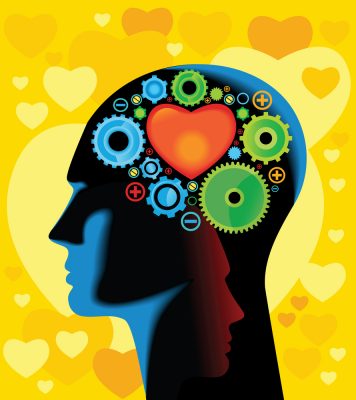
Head and Brain Gears in Progress.think about loveWe’ve known for a long time that people who have just fallen in love feel like they’re on drugs – their systems flood with the feel-good hormone oxytocin, they don’t feel as great a need for food or sleep, and they can feel like they’re floating on air.  In cartoons, their hearts beat out of their chest and they hear Klaxon horns when they look at the object of their affection.  Sometimes their eyes bulge out until they fall out of their heads and are revealed to be light bulbs, which would be challenging to most people, but it doesn’t seem to bother them at all.
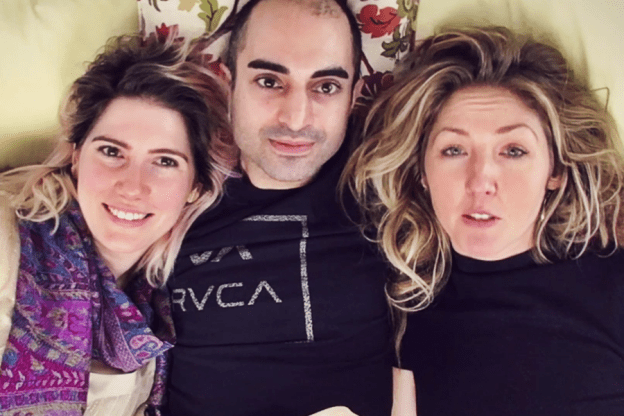
We also know that sometimes, people take drugs like MDMA or ecstasy to feel like they’re in love – which floods their brains with serotonin so that they develop deep emotional connections with strangers in a sand-filled tent at Burning Man.

This week, researchers at the Imperial College London may have discovered a real love drug that stimulates not just sexual but romantic feeling – Kisspeptin.

This hormone has a couple of important functions related to sex and reproduction– it triggers puberty, but it also turns a young man’s fancy to thoughts of love and romance, based on a study of 29 young men and their fancies.  Men were shown sexual images, nonsexual couple-bonding images, and neutral images, and their brains were scanned to determine their stimulation – those who were injected with kisspeptin did not just experience increased physical arousal, they also saw increased desires for couple-bonding and affection.  Their brains lit up in the areas associated with love and sex.  They also found neutral-to-negative images to be less negative when they were on the hormone, just as a person in love finds their mood elevated.

A Widow on Valentine’s Day (A Video Experiment)

Valentines Day is tough for a lot of people. For the widowed, it puts a magnifying glass and then a spotlight on the fact that our person is no longer here with us. Often, just getting through a normal, ordinary day, can be challenging. Getting through Valentines Day can be incredibly upsetting and even depressing.

A couple of years ago, I came up with an idea of something I could do on Valentine’s Day, to make people more aware of how tough this day might be for people like myself, while at the same time making them laugh or smile, hopefully. I decided to film myself standing on the streets of NYC, in front of a store that sells flowers, holding a sign that asks people if they might buy me a rose or some flowers, because Im a widow on Valentine’s Day. While doing this, I would react in an overly-dramatic way to the couples walking by me, letting them know over and over again that I would not be receiving any flowers or candy on this holiday.

I wanted to see if a total stranger would actually buy flowers for me, and how many others would ignore me altogether. What happened, was somewhere in between. At first, I was starting to become disheartened, as person after person walked away from me, or didn’t seem to believe that I was telling the truth about being a widow, so didn’t take me seriously. If I went home with no flowers, it would be a depressing experiment, and I would not have wanted to release the video at all. But that is not what happened. Strangers talked with me, cried with me, laughed with me, hugged me, and yes, gave me flowers. The last bit of the video is very sweet, and it brings back my faith in humanity, and reminds me of the kindness of strangers, whenever I should forget. I hope you enjoy this fun and “feel good” video.

A Man Grapples About What to Give on Valentine’s Inspired by an Emperor

Why isn’t the Kama Sutra laminated?


Valentine’s Day is upon us. And whether you’re single, in a relationship or it’s complicated, many of us ironically hate the day dedicated to love. You’re either made to feel awful that you don’t have anyone to share 24 hours with, or angry that a calendar is dictating you spend money to prove the affection you have for your partner. If you need a specific day to show someone you care, then maybe give your other half the gift of being more attentive.

I am far from perfect, but I try to be a good husband. I remind myself it’s the little things that count. It doesn’t come naturally for me, or most men, to do regular little things as we generally aim for one grand gesture every now and then. The bigger gesture the better. That’s genuinely how most of us think.

Royal Love

But no matter how hard we try, us men are put to shame when it comes to Shah Jahan and his relationship to Arjumand Banu Begum. Shah was the fifth prince Mughal Emperor of India; a country famed for the Kama Sutra, so I imagine they know a thing or two about love. Probably why Apu was chosen to be the quixotic character during a Simpsons Valentine’s Day special.

On a separate note; why isn’t the Kama Sutra laminated?

Different Strokes for Different Times

If we put aside the fact that she was betrothed to him, which is a nice way of saying given as property, and that he was also married to two other women, aside from that, his relationship to Arjumand was special. And it’s kind of cute when I tell you this happened when they were 14 & 15 years of age. Aaaaww. Now that’s different and magical and not at all creepy.

T&A Talk Sex: In Bed with Comedian Sina Amedson

T&A hop in bed with Sina Amedson, comedian and creator of The Saudi Prince (a hater from The Roast Battle on Comedy Central) to find out some of his most intimate details on relationships, sex and the weirdest place he’s ever done it!


T&A_Sina

Check out our 2017 New Year episode with Sina and Trisha Hershberger about what we learned in 2016 about relationships and what we plan do do differently in 2017. Episode 127! How will you make your relationship better in 2017?

Top Tips for the Best BJ

People often think that their own saliva will be enough lubrication to get the job done.


Ever wonder what goes down behind closed doors at blow job workshops? Wonder no more!

Below, sex educators and other experts from around the country share their best advice from BJ classes. (NSFW material ahead!)

1. Start slow.

“It’s fun to start soft. Let your partner get hard in your mouth, without any motion. Just let them experience the warmth of your breath and wetness of your tongue then gently begin to suck. Anticipation will make your partner even hotter.” ― Rebekah Beneteau, a sex, kink and intimacy coach and co-host of the webinar “The Joy of Oral: Make Your Next Mouthful Matter”

2. Don’t shy away from lube.

“People often think that their own saliva will be enough lubrication to get the job done. It’s actually best to add a bit of lube to get started: either water-based or silicone. After a few minutes, you may build up enough of your own juices to keep the action going. Sucking on a hard, sugar-free candy can also help you build up saliva.” ― Melissa Jones, a sexologist and executive director of the Sexology Institute and Boutique in San Antonio, Texas

3. Get handsy.

“Remember: A good blow job is 50 percent hands. Using your hands, with even pressure and friction in concert with your mouth, does more than what your mouth can do on its own. It can make or break a blow job experience.” ― Elle Chase, a sex educator and author of Curvy Girl Sex: 101 Body-Positive Positions to Empower Your Sex Life

4. Ask questions.

“Ask questions before you start and even during if you aren’t sure he’s having a good time. Every man is different. They don’t all like the same thing. Don’t ask broad questions like ‘Is this good?’ Instead, ask yes or no questions that give you concrete information, like, ‘Would you like it faster?’” ― Trevor Jones, a sex, kink and intimacy coach and co-host of the webinar “The Joy of Oral: Make Your Next Mouthful Matter”

The Origins of Valentine’s Day Are Not What You Think

Digging in to the Roots of Love on Wings, Beloved of the Day, and the original Roman festival 


In the Western world, Valentine’s Day was observed as long ago as during the Roman occupation of the British Isles. According to the American Book Days, the original connection between Saint Valentine and a lovers festival was quite likely accidental. Saint Valentine was martyred on February 14 in A.D. 270, and his name became associated with the Roman spring festival of Lupercalia, which was held on February 15. This festival, with its theme of fertility, apparently involved putting the names of young women into an urn, to be drawn out by men for “beloved of the year” pairing. Frank Staff, in The Valentine and Its Origins, notes the significance of a popular medieval belief that mid-February was the time birds paired for mating and that the associated idea of love-on-wings became connected to Saint Valentine and human lovers during that period.

Whatever its true origin, by the sixteenth and seventeenth centuries, Valentine’s Day had become a popular holiday, especially in Great Britain. It was a topic for poems and song lyrics, many written expressly for the occasion, such as John 14’ly’s “Apelles Song” 1584 in which Cupid and Alexander’s true love, Campaspe, play cards for kisses. Cupid unsuccessfully stakes his mother’s doves and sparrows on the game: a clear reference to the medieval association I have already noted. In addition, exchanging gifts-many times expensive ones-had become the custom on this date in the homes of the wealthy.

Time for Feathers?! Date Ideas for the Chinese Year of the Rooster

It’s almost lunar new year, which will see revellers across the world get ready for two weeks of celebrations to welcome in 12 months of the Rooster.


The start of the lunar year is getting ever closer, and millions across the world are preparing to gather with family, get out the firecrackers and celebrate Chinese New Year.

This January denotes the beginning of the Year of the Rooster, defined by the Chinese zodiac cycle.

The day is traditionally marked with the giving of gifts and celebrations with family, as well as looking to what the sign of the Rooster will mean for the year ahead.

Here’s everything you need to know about Chinese New Year.

When is Chinese New Year and why does the date change every year?

The Year of the Rooster will begin on January 28, 2017.

Celebrations will begin on January 27, New Year’s Eve, and typically last around two weeks, making this the longest holiday in the Chinese calendar.

This year the festivities are set to end on February 2.

As well as traditional festivities, Liverpool will also be putting on a light show

Parades are often held to begin the festivities for Chinese New Year

Red decorations and lanterns are commonplace during New Year celebrations

Chinese New Year takes place on a different date every year, because it is based on the lunar calendar.

We Discovered Some Amazing Ancient Erotica

We have been taught that sexuality and the sacred are polar opposites, but they were united in ancient traditions across the globe.


Riane Eisler’s groundbreaking research and writings on ancient cultures reveal this exciting reality about what so many women and men long for today… more meaningful, fulfilling pleasure and loving sexuality.

Music: www.bensound.com

How I Hit The Cosmic Love Lottery

It was in the classroom of my childhood that I received my first love lesson. I was raised with the belief that love was something to earn in the form of praise, approval, and permission, in return for being well behaved, smiley, charming, and “good”. Neediness was considered weak. Opinions were not welcomed. Mistakes were greeted with disappointment and retraction. And as a result, I entered adulthood, believing that love was a reward to be earned by pleasing, and serving the needs of others, but not myself.  Self-Love was a memo I simply never received.

Getting What You Deserve

When it comes to love relationships, we attract the kind of partner we think we deserve. If the relationship we have with our self feels flawed, dishonored, or unworthy in some way, we project that self-belief out into the world, and we receive our mirror relationships. If we consider ourselves as a half, we attract another half. Always looking for someone else to complete us, and in return, we complete them. This particular type of relationship is founded in lack and neediness, and has a tendency to leave you depleted, resentful, disappointed, disempowered, and woefully unfulfilled.

Do the best you can, until you know better, then when you know better, do better Maya Angelou

I intuitively knew that my childhood teachers were only doing the best that they knew how. My knowing better would arrive in the fallout of my failing marriage, and the heart breaking truth that once more, I had made my choices from a place of lack and fear, for the happiness of others, but not for myself. The suffering in living with the belief that love existed in another person, in a place, a situation, or a thing, felt anything but loving. It felt painful. Ultimately, the emotional price of not taking care of my own needs led to the ending of my marriage. But it would also mark the end of living in fear; and the beginning of waking up to the bliss of the love lesson I’d been missing all along.

What is My Sexuality Anyway?

I know if I stuck to one label one day I would just begin to question it the next day.


The idea of sexuality has been widely established as a spectrum. According to a majority of people, everyone is a little bit gay or straight or whatever. Some people even pull the “who needs labels in the first place” card. The answer to that is, well, a lot of people. Labels are important to a lot of people to properly establish who they feel they are. But those labels can change.

I’ve talked before about how I identify as asexual. I came out as a biromantic asexual on Facebook to my friends and family not long ago. But now I’m even beginning to question that. I’m starting to think there isn’t a label for me.

And I am a person who needs a label. When I was told by a psychiatrist that I had bipolar disorder, I felt an overwhelming sense of relief. I needed that label. I needed to establish my identity. And when he saw how badly I needed it, he gave me that.

The concept of my sexuality is a much different thing than my mental affliction, but I’ve dealt with the same thing regarding labels. The mental illness thing was easy to pinpoint. My label as far as who I am in regards to who I’m attracted to, not so much.

I came out a bisexual when I was thirteen. My parents were very accepting of me and said they would support me no matter who I would eventually bring home, but they didn’t take it seriously. For years I had to defend to my mother that it wasn’t a phase and that I wasn’t going to go “one way or another” when I eventually settled down. I don’t blame her for it at all, she just used to not fully understand how bisexuality worked.

True Love Lessons with Sierra

Are you struggling to find LOVE?


sierra wedding

Watch as Sierra Mercier:

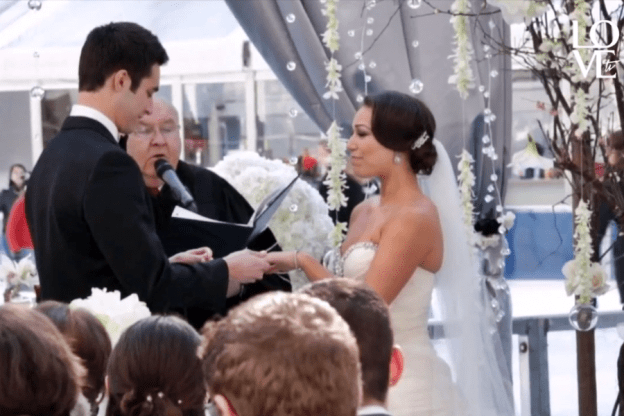
  1. Shares her wedding (The First Winner of ‘the Knot’ Dream Wedding).
  2. Discusses tips on how to be successful in finding LOVE.
  3. Shares the ‘True LOVE Lessons’.

Sex After Loss: The First Time After the Last Time

When it comes to living your life after the death of your partner, everyone is different. There is no “How To Be Widowed” Handbook, and even if there were, it would probably be filled with endless contrived catch phrases and cliches.


The truth is, none of us have the slightest idea what the hell we are doing, and we each take different paths to get there. Love, after the loss of your partner or spouse, is a very tricky and individual thing. It is also not what this article is about. This article is about what it’s like, in the moment, when you lose your “widow virginity.” And yes, that’s our term for it. When your husband or wife or partner dies, the time after their death that you spend NOT sleeping with anyone, is referred, to in the widowed community as being a “widow virgin.” Now, keep in mind that one can hold widow virgin status for weeks, months, years, even forever. On the opposite end of the spectrum, others may lose their widow virginity in the time it takes me to type up this piece. We all grieve and cope differently.

For me personally, the first 3 years after my husband’s sudden death, I didn’t even think about sex. I’m completely serious. I was too busy crying, grieving, and being in emotional pain 24/7. Also, the very idea of someone other than my husband even touching me, made me feel physically nauseous. One time, a man in a security uniform that looked a lot like my husband’s old EMS uniform, was hitting on me and asking for my number as I tried to walk home from work. When he was finally out of my sight, I turned the corner of the street and threw up. So, for a long time, just the sight of any man showing any interest in me, and him NOT being my husband – gave me a terrible, very physical reaction. It was also a very long time until I could practice in “self-love” again. This is how that would go: In order to get turned on, I would try to have thoughts about my husband, and I would try to picture us together again and our loving and wonderfully fun sex life. I would try to pretend that it was him touching me and making me feel amazing. It would work pretty well for the first few minutes, but then somewhere in the middle, I would have this realization that I would never be with him again in that way and that he would never be touching my body again or making me feel good again, because he was dead forever – and then that thought would depress the hell out of me, and I would have to stop with the self-pleasure. I could never “finish”, and then I would either get incredibly annoyed, pissed off, or extremely sexually frustrated because I was beginning to think I would never again have an orgasm. Every masturbation session would end up with me sobbing my head off for 30 minutes straight, or beating the shit out of my pillow while I screamed to nobody: “WHY THE F**K ARE YOU DEAD???” Talk about a buzz-kill.

WHY Do You Weigh Yourself?

Yesterday as I was leaving my gym, I noticed a young woman 20-ish, standing naked on the scale in the locker room.  I also noticed standing near her was another naked woman who was probably her grandmother, waiting for her turn to weigh in.  This caught my attention because I thought to myself why do we weigh ourselves?

Now a lot of  you are thinking,  “Gina done lost her mind! Duh!”   But hang with me here, because you all know that I look at things from a different angle, and generate new perspectives that I share with you.     The important thing, as I am prone to do with EVERYTHING  is to ask the question WHY.    Since I was a kid, that question is so prevalent in my life that I should be known as a whyman, instead of a woman. ( Ok, you know I always sneak in a weird pun.  Let’s hope that’s the only one today.)

Today I want to  invite you to explore the WHY to this question so that you have a vehicle to become more conscious of the many things we all do unconsciously and to break away from the herd and THINK FOR YOURSELF.  This way of thinking is like a muscle, and the more you use it, the stronger it gets.

Ok, so seriously, why do we weigh ourselves? What real purpose does it serve? What does that number on the scale have to do with anything important or relevant in our lives? I’m speaking here of a healthy person, just as a disclaimer. I know that there are some perhaps medical conditions where weight is a determinant or a marker of something, or professional fighters weight themselves for fairness in  the ring,  but I’m speaking just of the average person and particularly women.  What’s the first thought that came to your mind in answer to that question?  Did your brain go all fuzzy with, “hmmm, to find out what I weigh?”  Think again…

That number on the scale has absolutely no meaning other than its purpose to frustrate and lower the self-esteem of almost every woman who steps onto one.    Once you get that number, you IMMEDIATELY (talk about instant non gratification)  feel that there’s something wrong with you. The number is wrong and you need to change it, even if it’s only a couple of pounds.   Which then leads to your endless googling and obsessing about the ultimate weight-loss products, or deciding to go on a diet.   That number leads to comparison of what other people weigh, like that woman you saw in the magazine (which one, so many!) that made you hate your thighs even more than you already do, or your facial lines, or your eyebrows,or your butt, or your…..fill in the blank.

THAT FREAKIN’ NUMBER is a trigger, a catalyst that’s damned near Pavlovian to make you feel bad about you! Pretty soon all you have to do is SEE a scale and you’re terrified.  All those bad feeling start a rush of chemicals in your body, aka hormones, that make you feel like crap about yourself and soon you’re depressed.    In fact, most women will tell you that just the sight of a scale provokes anxiety.   I saw a statistic that said most women weight themselves an average of twice a week, or 104 times a year!   Think about the repetition of an act that makes you feel bad about yourself that many times in a year and the effect that has on your psyche.   That irrelevant number on the scale leads to depression and the sense of inferiority for almost every woman.  Tragically, even anorexics experience exactly the same thing because the number is never small enough.

Realizing they’re not  their “ideal” weight, some women eat their feelings, so  may end up self-soothing with food, and voila, when you step on the scale, guess what??  That sneaky number is bigger.  So you’re now more depressed, and you end up on an anti-depressant, which can make you eat more, eat less, feel suicidal, lose your sex drive, and affect your hormones.  Do you see the vicious cycle that develops just from stepping onto a scale?? Do you see the path of disempowerment that can be triggered by this practice of weighing ourselves?  To some of you it may seem I’m exaggerating, but for many this is truth.

You might argue that someone who is chronically overweight and on a program to lose weight would be inspired by the number coming down, and while that is true to some degree, it is also setting them up to define their successes by THAT NUMBER, rather than celebrating their discipline, commitment and choices, and the obvious visual that they’re shrinking.

Is that number a goal, a target, a golden ticket?  Is it like winning the lottery?  And what is the RIGHT number?  There is no right number on a scale.  It’s an insidious tool to keep you in the marketplace of all the consumerism revolving around deflating and destroying women’s bodies and beauty — and ultimately our power.  The right number comes from you living a healthy, balanced life; body, mind and spirit.  Our mindset is to reward ourselves for a number goal, rather than the goal of living in integrity with our authentic selves.  I wrote a blog post a while back called “Joy, the Key To Weight Loss” (in the archives), and in it I talk about the idea that when we are content inside, we are content outside, and our weight arrives at our most healthy, natural number.

So you see the scale is actually a tool that undermines your self-esteem, your self-worth and a healthy sense of your body.  What if instead of stepping on the scale you simply paid attention to how you feel, to the way your clothes fit? What if you ate a healthy diet and allowed your body to take the shape that it naturally wants to inhabit?  What if you exercised regularly, were emotionally healthy, self-loving and had a strong and comfortable connection to your sexuality?What if you became guided by what you felt on the inside, instead of by the number reflected on the outside? A number, by the way,  chosen by an industry focused on taking your money and your self-worth.    As it’s used by most women, that scale is a weapon of self-destruction

What if you decided to never ever set foot on a scale again to find out what that number is? What if you decided right now to chuck the one you may own?

Because I do share personally, I can tell you that I have truly lived this way. I’ve never personally owned a scale, nor will I.  Like any woman, my weight has fluctuated throughout my life, and I’ve had a  child, so weight gain was part of that experience obviously.   I know personally that when I’ve been unhappy or in self-betrayal, my weight has increased or decreased from what was MY HEALTHY.  My feelings and how my clothes fit were my clues that I needed to make changes in my life.  I wasn’t striving to arrive at a number on a scale, but to arrive at a place of equanimity and joy within me.  And only I know where that place lives inside me.  That place determines my weight, but the number has been unknown to me for years.

Yes, of course I’ve weighed myself at times, but it’s how I know NOT TO.  I’ve been just as affected by seeing a number not aligned with the “ideal.”  I live in the same world with all my sisters and I’m not immune to the subliminal and overt mental manipulations all around me.  I CHOOSE to unplug from them and listen to the voice within me.  She is my compass, my wise woman, and the keeper of my health; body, mind and soul.    In my opinion, our mental health, aka our belief system, is more of a determinant in our self-esteem and physical health  than almost anything else we do.   When you pay attention from the inside, life changes radically.

So I ask you again: why do you weigh yourself?

I’m now asking  you personally as you read this to stop and to answer what may seem like the most mundane and simple question, but to answer it for YOU personally. Answer it with the ideas in mind which I’ve shared with you in this post.  This will give you a window into your own feelings which may be unconscious about your body and your relationship to it.   And I truly hope it inspires you to become a WHYman about EVERYTHING.  (sorry, there it is again.)

If you enjoyed this post, please share it with someone you care about,  Especially the women in your lives.   And that goes for you guys reading this, too.  I hope that for the guys who read my posts, that doors and windows open in your mind to generate a better understanding of some of the challenges women face in the struggle to feel good about themselves.

And ladies, if you’d like some help in learning how to chuck the scale and to love yourself from the inside out, my NATURAL BEAUTY AND TRANSFORMATIONAL LIFE COACHING is an aspect of what I do that I LOVE and am passionate about.  Explore the page to learn more and to watch my video.

And remember to share this post with those you feel would appreciate the message.  And I invite you to weigh in here with me (got one last one in!) and leave a comment below.  I’d love to know your thoughts and have you share your feelings.  I’m deeply passionate about helping you shine your light and your beauty as fully and brightly as you can.

With wild, fierce love and gratitude,

Gina Cloud