LOVE Archives - Page 17 of 36 - Love TV

Why You Reject an Eager Suitor

Why do women discount and dismiss men who are eager to commit themselves right away?

1. Women understand the male role as the gatekeeper of commitment, just as we are the gatekeepers of sex.

In the same way that a man may question the long-term potential of a woman who grabs his junk on the first date, women are wary of men who are “emotionally promiscuous.”

Certain it is I liked her, 
And boarded her i’ the wanton way of youth: 
She knew her distance and did angle for me,
Madding my eagerness with her restraint, 
As all impediments in fancy’s course 
Are motives of more fancy; and, in fine, 
Her infinite cunning, with her modern grace, 
Subdued me to her rate: she got the ring;

Shakespeare, All’s Well That Ends Well

2. Some people are serial monogamists – the minute one relationship ends, they’re auditioning everyone in their sphere as a potential replacement.

A fellow SM may happily make the deal quickly, but most people want to take their time selecting a relationship partner, and they want to be evaluated and chosen with the same care.

3. A hasty attempt to elicit commitment has a vibe of desperation about it.

Like a used car salesman, he doesn’t want you to spend time looking under the hood, and he’s peevish if you want to think about the decision for a while. People with options tend to weigh them carefully, so rushing into a relationship implies a lack of options, and it carries the whiff of insecurity or fear.

4. Women expect to have to compete for a male, winning him over with our feminine wiles and enticing him into exclusivity as we successfully navigate his high standards.

Women do not want to be robbed of this opportunity to compete with other females. If there are no other females competing for him, a guy benefits from holding to his high standards in any case. Having low standards, or worse, none (like our friend in the comic above), is a turnoff to women.

Long Distance Relationships: Do They Make the Heart Grow Fonder?

…being in a long distance relationship, at least for some amount of time, has become a hallmark of modern dating.


Technology has had a huge impact on how we interact and participate in relationships. This goes double for long distance relationships.

The whole concept of LDRs has taken on new meaning thanks to Skype, FaceTime, and iMessage. To say that these types of relationships are “not what they used to be” would be a major understatement. Being in a long distance relationship for some period of time has become a hallmark of modern dating.

When it comes to long distance dating, there are two prevailing opinions that everyone seems to accept. However, they directly contradict each other.

Opinion 1. Are LDRs risky and destined to fail? Most friends and family will likely tell you this before you ignore them and decide to give it a try anyway.

Opinion 2. Or is there actually some truth behind the old saying that absence makes the heart grow fonder?

What does the research say?

As it turns out, recent research is on the side of LDR believers. A 2013 study published in the Journal of Communication set out to challenge the notion that long distance relationships are inherently less fulfilling and less sustainable than their geographically-close counterpart. The authors of the study, Crystal Jiang and Jeffrey Hancock, found that this type of partnership can actually form stronger bonds, promote deeper communication, and produce greater intimacy than traditional relationships. The reason for this is that long distance couples work harder to communicate affection and intimacy. They generally appreciate each other’s behaviors and actions more.

If this doesn’t convince you, another, more recent study published in the Journal of Sex & Marital Therapy last year found that there were no major differences in outcome predictors of long distance relationships and regular ones. This study, which asked participants to assess and measure the levels of intimacy, commitment, communication, and sexual satisfaction in their relationship, among other things, concluded that LDRs are not actually at a disadvantage.

There is no denying that dating long distance can be stressful, challenging, and oftentimes lonely. This doesn’t necessarily mean that it’s not worth trying. With the help of modern technology, it seems that LDR couples are finding more ways than ever to feel close to each other The extra effort and planning this requires actually brings greater rewards. Additionally, may people find that they are more independent and have more time to themselves. At the same time, they still enjoy the emotional benefits of being in a relationship.

However, there is a caveat…

One caveat to these studies is translating the extra effort and newfound emotional satisfaction back to a short-distance relationship. For a long-distance relationship to really work, the “long distance” part must come to an end at some point. When this happens, it may require some serious readjustment. And, unfortunately, more couples break up within the first three months living back in the same place than they do while living apart.

According to Jiang, long distance couples “tended to idealize their partners’ behaviors, perceiving them as more likely to share personal thoughts and feelings and more responsive to their own thoughts.” While this is beneficial during the time apart, the enhancement of positive feelings about the relationship might actually create false expectations about how things will be when the couple reunites. As Jiang explains, “[t]he positive illusion goes away when they spend more time together.”

While LDRs can foster healthy behaviors in each individual and promote optimistic feelings about the strength and value of the relationship, these things ultimately need to exist in the relationship whether it’s long distance or not. As Andrew Merolla, an associate professor of communication theory, sees it, the strength of a long distance relationship depends on the strength of the relationship itself. As such, the outcome of either is likely going to depend on the couple’s ability to find a balance — whether that means creating a little more space when there isn’t enough, or working to make every interaction count when there’s too much.


Curated by Erbe
Original Article

Call the Wedding Planner! Six Global Wedding Traditions You Must Add to Your Big Day

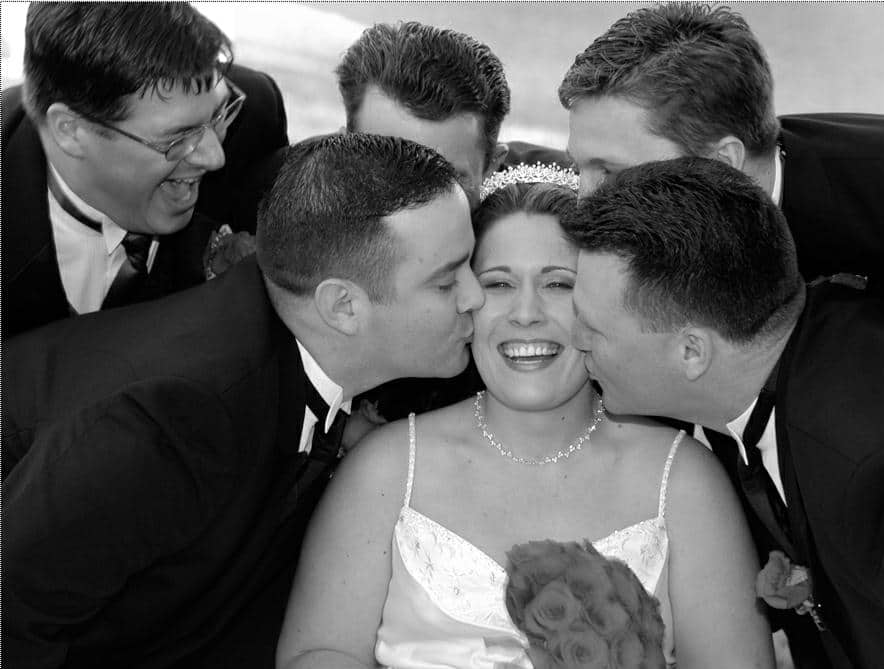
3. Swedish Kissing –

swedish kissing tradition

Brides and grooms stop reading this, bridesmaids and groomsmen this is for you. Every bride or groom is someone else’s ‘one who got away.’ Maybe that person happens to be your best friend’s fiancee. You’ve fantasized about that person, imagined yourself standing next to them at the altar, leaning in to kiss them. In Sweden, you’re allowed to play out that fantasy. Every time the bride or groom leaves the room, guests are allowed to plant a kiss on the one left behind. Your best friend is going to have to go to the bathroom eventually, leaving your crush sitting all alone. Get in there, it’s your time! This is (probably) your only chance! Ok, you can bring back the bride and groom, tell them this was about wedding presents.

4. Egyptian Royalty –

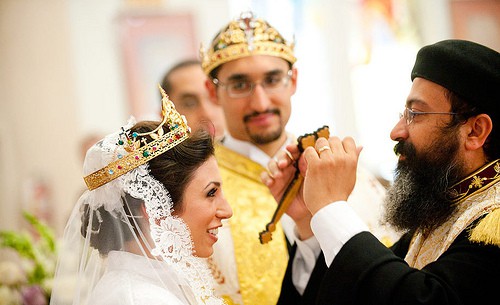
Coptic Egyptian wedding

This is a day everyone you know and love has come together to honor you and your fiancee’s love for each other. All eyes are on you, and everyone is showering you with adoration. Why wouldn’t you wear a crown? I’m not talking about a tiara, I mean a crown, and you both get to wear one. In Coptic Egyptian weddings it is tradition for the bride and groom to wear crowns and capes, similar to Eddie Murphy’s look in Coming to America. It’s meant to symbolize glory and honor, where the new ‘king and queen’ establish their own little kingdom – their home. Remember that when your new little princes and princesses are vomiting on your shoulder.

When Was the Last Time You Really Played With Yourself?

When we don’t play in our bodies with connection, or we use them with the robotic qualities that are often present when we exercise or do many other physical things, and when we are constantly absorbing impulses from outside of us, we can’t commune with our own original, intuitive, inspired self.  We don’t have access to that small child that knew love and laughter and joy and every emotion with pure, uncensored 100% authenticity.

Society tells you which emotions are OK these days,  and which ones aren’t.   And now there are so many pills to make sure that your emotions conform to what is socially acceptable  and politically correct.  If you don’t express your emotions within that range, you get some kind of psychiatric diagnosis, a stigma and a pill to get you back in the box.

We don’t play when we live in that box.  It’s a coffin,

Our lives have become about which pill do you choose?  And there’s a lot more than blue and red.   From my observations, most of them are anesthetizing us into conformity and robbing us of our our capacity to play, to feel, to connect to our authentic selves.

What was that thing you loved to do as a child that you don’t do anymore because someone told you that you had to grow up and act like an adult?   Or being told that being a certain age meant you couldn’t do those things you loved anymore?  Can you remember?

After we’ve had all the joy and the imagination and the unselfconsciousness that comes with being a child removed from us,  we then begin the journey of trying to remember what we knew and to try to retrieve all of that make-believe.  We feel empty and KNOW something is missing.  The workshops, the self-help, the therapy,  all of it designed to help us get back to this part of ourselves.  And it works, in large part.  That’s why the industry is so huge.

Dating Differences in Foreign Lands Like Korea and Iran

COUNTRY: IRAN

iran flagDating Difference: The Islamic country is at a crossroads when it comes to dating customs. Women still cover their faces and the genders cannot mix freely in public. Yet a form of online dating has emerged in the country, as reported in a February 2009 Al Jazeera article, and a concept of temporary marriage has taken hold as a stand-in for relationships. Nearly 60 percent of the population here is younger than 30, and the new mindset is that it’s smart to sample the goods before buying.

Biggest Shocker: Some may appreciate the cut-and-dry nature of online dating in Iran. The agency is operated by clerics and there’s not much time to “see where things go.” Those who use the service get three meetings, two of which are supervised. If the couples mesh, they get a third meeting, after which they have one of two choices: marry or never meet again.

COUNTRY: FRANCE

Dating Difference: The French seem to have perfected the art of “non-dating” dating. You meet people and date in groups, not one-on-one.

“As a general rule, dating in France barely exists,” says Lindsey T., an American who lives in Paris and is married to a Frenchman. “From the moment you express interest in one another and kiss, it can be assumed you’re in a relationship.”

Girls who complain about the fade-away will be happy to know that it doesn’t happen much in France. Men and women will clearly state their interest and disinterest. Men also rarely play hard to get.

“I think if you don’t want to be boyfriend-girlfriend and the French guy is into you, the normal hints — putting off plans, vague texts — might not get the message across,” says Leonora E., who lived and dated in Paris for a year.

Biggest Shocker: Even though this is the land of fast hook-ups and romance, many French still frown upon women pursing men, as highlighted in the article “French Women Don’t Date” on France Today. This means even if you’re just trying to be friendly, a Frenchman might take it as an invitation to get in your pants.

I’m a Unicorn… I Date Couples

To avoid this type of awkwardness, I’ve turned to dating sites and apps. I know, I know, these apps and sites are dreaded by many and have a terrible reputation, but I personally love them. They’re a great way to know whether or not everyone is on the same page and to get it right out there in the open. I met a couple from Portland once using OK Cupid. While he was barely tolerable when not on my bed, she was super hot and he was great while actually doing the deed so it worked out perfectly. The best part about it was that they left right after and I had the place to myself! In addition to OKCupid, which is a site actually attempting to make it easier for couples as well as others in the “LGBTQ” community to date, I’ve also used apps like Tinder and 3inder. 3inder is like Tinder but with an ability to make a true couple’s profile. It also allows for more than one other person to be brought into the messages. The only downfall is that it’s incredibly glitchy, so it’s best to have a messaging app like KIK that people can just directly message you on if they like what they see once they’ve come across your profile. Quick word to the wise: it’s best to have your rules right there on your profile. Mine reads: “Couples and single females only. NO SINGLE MEN.” I know this sounds unkind and discriminatory, but you have no idea how many unsolicited dick pics I received before putting that in my profile, and how often I used to get men asking me to call one of my “fun girlfriends” to play with some single guy and myself. No thanks dude, not my job to make your fantasy come true. I’m busy fulfilling my own! There’s also Craigslist, which, if you can get past all of the horror stories and rumors of horror stories, can also be quite fun. No matter which of these methods I use, I always play it safe by meeting in public first. That way, not only can I rule out a murdery vibe, but I also get an idea if that person is going to be as fun in between the sheets as they were in text. In lieu of apps and sites, you can also frequent swingers clubs and sex parties. If you’re a single guy, this can be tricky because you’re often not allowed or have to pay higher prices. Sorry. I have no answer for you. I’m lucky. I’m a Unicorn, so I get in FREEEEEEEEE!!!!!! This is just another one of many benefits to being such a rare beast.

Another tricky part of couple dating is figuring out whether or not the other member of the couple is just as into it. I like to call myself a sexual socialist, meaning that everyone must have equal fun otherwise, I just can’t have a good time. It’s typically the guys who reach out most often, so sometimes I’ll ask the guy I’m messaging something along the lines of, “what kind of things is your girlfriend/wife into?” and often he replies with something like, “Well, I’ve been wanting to add a girl into the mix and I think she’d be cool with it. She might even have fun…” WARNING!!! Do not proceed with this one. This is the guy who’s trying, at anyone’s expense, to fulfill his fantasy. This will end in tears, punches, smeared mascara, or extreme awkwardness, and if you’re lucky that’ll be it. However, often times the answer is something more along the lines of, “Well, she’s super bi but has a tough time meeting women…” etc, in which case, I proceed. The best way to tell if all parties are equally excited by adding a third is to simply ask for the other member of the couple to be brought into the conversation. I’ve done this before and have had varying results, the most prevalent of which being a complete end to the convo. Fine, then she wasn’t into it and you just proved it. Thank you for making my job easier. Now none of us has to waste any more time!

What Not to Do During the First Few Dates

Ignoring your inner voice.

If you’re wondering whether you’ve got enough in common, are truly attracted or have chemistry, most likely, this is a sign that you and your partner aren’t compatible. Be careful not to discount red flags and doubts just because it feels so good to be in the throes of passion. You may waste time in a sub-par relationship trying to make something work that just won’t.

Worrying about exclusivity and commitment.

It is common at the beginning of a relationship for people to be dating multiple partners. Online profiles are not shut down until a person knows that he or she wants to be exclusive. Until committed, Facebook, Instagram and Snapchat accounts might be frequented by old flames or friends with benefits (and maybe even after you’re Facebook-official). Assume that the person you’re going out with is seeing others. Try and be easygoing about needing exclusivity or initiating a commitment discussion too early. Manage your anxiety and do your best to cope with uncertainty while you are seeing where this goes.

Whether you’ve just hooked up or you’re a few dates in, recognize that the beginnings of a relationship aren’t easy. Making snap judgments about a person or fantasizing wildly about walking down the aisle are normal, but may not help you if you act on them.

Keep the above tips in mind and try to stay cool about your feelings. Remember, you are just getting to know each other and not everyone is going to be a perfect match. That’s why it’s so special when you find “the one.”


Curated by Erbe
Original Article

The Married Millennial: What Marriage Isn’t

The Wedding industry in the United States has an estimated worth of nearly $60 Billion. That may be no surprise, but did you know that the Divorce industry is booming, too?


Recent findings suggest that the Divorce industry’s total worth in the U.S. is $50 Billion or more. It makes sense, then, that most lifestyle websites will have a “Weddings” section and a “Divorce” section, with little to say about the marriage in between.

Marriage isn’t cool, these days. Stable relationships simply don’t make headlines. Hollywood magazines are constantly on the lookout for wedding announcements and breakup scandals. Paparazzi follow newly married celebrity couples, denying them privacy. When the whole world is waiting for them to screw up, is it any wonder that most famous marriages fail?

If our famous role models are divorcing, our parents have been separated, and our newly engaged friends are over-sharing ring selfies left and right, it’s understandable that we have warped ideas of marriage.

To define what marriage actually is, let’s consider what it isn’t.

Marriage is not a blissful horseback ride into the sunset.

Most people do not have their lives figured out, their hearts fully mended, or their finances in perfect shape before tying the knot.

Before I met my husband, I said I would never marry unless I: (1) had become wildly successful, (2) conquered my anxiety, (3) made a million dollars, and (4) owned my own home. But then, I met him…and there went all my plans.

On the other hand – marriage is not a bummer. At all.

Our relationships reflect our inner states – and how you value your partner shouldn’t change just because you’re married. Happy unions are not as rare as you’d think. People who are genuinely happy with their partners are actually less likely to talk about it on social media, or in public. Unhappy people, on the other hand, are much louder about their dissatisfaction. Marriage, by itself, does not make people unhappy. Life does. It’s been said to “Never take advice from someone you wouldn’t trade places with.” This applies to marriage tips, too.

Marriage is not about “settling” or compromising on your dreams.

Sure, my checklist didn’t happen in the order in which I planned it, but since being with my husband, I’ve accomplished more than ever before. He encourages me – and because we have similar goals, we work well as a team. You don’t have to be alone in order to achieve your dreams, as long as your partner is truly supportive.

If you expect your partner to set aside their goals in order to make the relationship work, this is a problem. If you’re thinking that marriage will change your partner (or you), it won’t.

Marriage is not about you.

It’s not your partner’s job to make you happy – it’s yours. We all have problems, but your spouse can only do so much. There’s a reason why people say the first year is the hardest: our personal expectations almost never match the reality of a lifelong partnership. Nobody “fixes” us.

When we date, we often present the perfect package. We offer the best versions of ourselves – and this is not a bad thing. Unfortunately, there are two sides to every coin, and you need to be willing to work on your issues. Marriage brings only one guarantee, and that’s vulnerability. It is a commitment to working on yourself, while encouraging your partner in their journey.

Marriage is not the end of freedom – not anymore.

I can’t tell you how many people asked me “why?” when I said I was getting married in my early twenties. There’s an outdated image of a 1940’s housewife begrudging her chores, and a 1940’s husband who’s dying to cheat on her.

It’s 2016, people! Marriage has changed as much as we have. My partner has a career, and so do I. He has friends, and I have mine. We do fun things together, and have no qualms about going places on our own. Nowadays, people can get married because we want to. Not because we have to.

Marriage is not the end of sex, or dating.

The longer you’re together, the more opportunities there are to be creative. Being married is not an excuse for complacency. You may not sweep your partner off their feet every day, but don’t forget to make them feel valued. Intimacy is only as important as you make it…So make it important.

Marriage is not everything.

My relationship with my husband is number one to me. But if I don’t have a life outside of our marriage, it’s unhealthy. Maybe that’s why marriage doesn’t make headlines: we’re all just people living our lives. It’s not as glamorous as a wedding, or as dramatic as a divorce, but I like this better. Much better.

In the end, Marriage is what you make it.

It’s like any other thing, except it involves another person who is equally important and committed. Marriage might have changed in meaning, but love itself has not. Commitment relies on communication in order to thrive.

Marriage looks different on everyone. Choose your own adventure.

There are countless variations to the traditional marriage model. In the Western World, gender roles don’t matter the way they used to. Women can choose to have careers, or stay at home – and so can men. These days, most of us get married for love, and having children is optional. Some couples live together, and some live apart. Monogamy is a choice between two people, and some marriages skip it altogether. Regardless of gender, religion, race, sexual orientation, married or unmarried, we all deserve to love – and be loved – in the way that’s right for us.

Are Your Genetics Effecting Who You Are Attracted to?

Next, the researchers set out to determine whether genes or the environment was a bigger influence on how people perceived attractiveness. In other words, they wanted to figure out what accounted for the 52 percent disagreement rate they saw in the first part of the study.

For each twin pair, the researchers compared the preferences of one twin to those of the other, to determine how similar they were. Then, they compared the similarity of all of the identical twins’ preferences to those of the fraternal twins, Germine said.

If the identical twin pairs had preferences that were more similar than those of the fraternal twin pairs, it would suggest that genes play a bigger role, Germine said. But if the identical twins’ preferences were not more similar to each other, it would suggest the environment plays a larger role, she said.

The researchers used standard calculations, that are often used in twin studies, to figure out the relative influence of the participants’ genetics and their environments on their ratings of people’s attractiveness. They concluded that people’s individual environments accounted for most (78 percent) of the differences in how people perceived attractiveness.

And even for each twin in a pair, a person’s individual environment is unique, the researchers said.

For example, even though twins share a lot of their environment because they usually grow up together in the same house, their individual environments — including their friends, what they see in the media and their first relationship — differ enough to give each twin an individual perception of attractiveness, Germine said. Previous research has shown that if people see a face and associate it with something positive, they tend to find that face more attractive, she added.

The researchers noted that shared environments (as opposed to individual environments) may still play a role in influencing people’s preferences, but for this study, the population included was not very diverse.


Curated by Erbe
Original Article

Millions Trying Open Marriage

For many couples, the idea of monogamy is evolving. Is it open season on sex outside of commitment?


For the first time in history, more Americans are single (50.2 percent) than married. But for those who do tie the knot, the general idea is still the same: You’re now emotionally and sexually exclusive with your partner. Even if you never marry but have long- term relationships, monogamy is usually part of the unspoken agreement.

That’s starting to change. “Monogamy is no longer going to define marriage,” predicts couples therapist Tammy Nelson, Ph.D., author of The New Monogamy: Redefining Your Relationship After Infidelity, who says she’s seeing more couples experimenting with open relationships (in which a couple decides what sexual activities outside their relationship are fair game) and polyamory (having actual romantic relationships outside a primary commitment). It’s not cheating or “looking the other way,” but having relationships or encounters with the consent and support of your partner.

While it’s impossible to know exactly how many U.S. couples are consensually nonmonogamous, estimates range from 1.2 to 2.4 million, Elisabeth Sheff, author of The Polyamorists Next Door, wrote last year in Psychology Today. Couples have made “agreements” since marriage was invented, but as open relationships become more established in popular culture—some Hollywood couples have talked about theirs; two of last summer’s indie comedies (The Overnight and While We Were Young) featured subplots centered on nonmonogamy—more people are comfortable coming out about their lifestyle.

“MANY PEOPLE IN THEIR 20S AND 30S ARE CHILDREN OF DIVORCE, AND THEY WANT A DIFFERENT CODE OF HONESTY.”

It sounds counterintuitive, but many people practicing nonmonogamy see it as a way to preserve their relationship, not implode it, says Esther Perel, marriage therapist and author of Mating in Captivity: Unlocking Erotic Intelligence, whose TED talks on marriage and infidelity have been collectively viewed more than 10 million times. “Many people in their 20s and 30s are children of divorce, and they want a different code of honesty,” she says. “The idea of consensual nonmonogamy is in service of the longevity of the couple: ‘With this, we can avoid lying, cheating.’ They’re taking the concept of sexual freedom inside the marriage.”

Below, three happily married couples in open relationships explain how they, well, do it.

The Modern Family

The Couple: Nicole Sharette, 38, and Luke Sharette, 35. LOCATION: Eugene, Oregon.

Status: Married for 12 years.

Kids: Six.

Our Arrangement: “I’m a stay-at-home mom. Outside of our sex lives, we’re a traditional family. Luke has casual hookups; I have long-term relationships. I’ve had one boyfriend for eight years, another for three, and I’ve dated a couple for four. We go out anywhere from every three months to three times a month.”

How It Began: “I’ve always wanted to do this. When we first got together, Luke was very vanilla [sexually], and that slowly changed. I said, ‘Wouldn’t it be nice to enjoy this with others?’ He came around to it, then we talked for a year. First I just dated women, and Luke realized that I wasn’t going to leave. When he had his first experience, he saw that my feelings wouldn’t get hurt.”

The Rules: “We used to have rules about who we could and couldn’t sleep with (like, I didn’t want him to hook up with my best friend). Now we don’t, except that we have safe sex with everyone else. Luke doesn’t tell me how often I can go out, and I don’t tell him. We just respect each other.”

“WE USED TO HAVE RULES ABOUT WHO WE COULD AND COULDN’T SLEEP WITH (LIKE, I DIDN’T WANT HIM TO HOOK UP WITH MY BEST FRIEND). NOW WE DON’T.”

Jealous Much? “I like the feeling. Jealousy excites me.”

The Good: “We don’t get bored with each other. It makes us communicate and grows our trust, love, attraction, and appreciation for each other. It also keeps us both feeling young, which is hard when you have a lot of kids.”

The Bad: “We have kids in their late teens. When they were younger, they saw Luke out with another woman and thought he was cheating. We explained that we love each other but we have other friends. They get it now. They’re also very monogamous and paranoid about cheating.”

The Poly Partners

The Couple: KC, 34, and Marissa, 31.

Location: New York City.

Status: Together for three years, married since September.

KIDS: Zero.

Our Arrangement: KC: “We have a circle of polyamorous friends. We have sexual interactions with them at parties, either together or separately. Or we’ll have friends over and one thing will lead to another—but then they go home.” Marissa: “We don’t have other romantic partners.”

“WE DON’T HAVE OTHER ROMANTIC PARTNERS.”

How It Began: Marissa: “KC and I have both tried open relationships, but this is the first time it has worked out well. We started our relationship like this. Going from monogamy to nonmonogamy is very difficult, especially between people with disparate levels of relationship experience and insecurity.”

The Rules: KC: “I wouldn’t want either of us to hook up with someone who expected more than what we’ve offered.” Marissa: “Or if we know they’re emotionally unstable.”

Bilateral Support: Marissa: “I’m bisexual, so I still get to explore that. KC might say, ‘You’re talking about dudes a lot lately. Do you want to make some calls?’ “KC: “People have different sex drives and ways of connecting. If you thrive on that, to shut off that part of yourself can be suffocating, even if you have a good sex life with your partner.”

The Good: KC: “You can be yourself and not constantly self-monitor.” Marissa: “You’re not afraid that the other person is going to stray. Why would they?”

The Bad: KC: “I’m not out to my family. When I tried to talk about being in an open relationship, it got dismissed: ‘Oh, it must not be serious.’ If we’re not romantically involved with others, my sex life isn’t my parents’ business.”

The Lawmakers

The Couple: Susan Coates, 43, and Taj Moore, 40.

Location: Denver.

Status: Together eight years, married for four years.

Kids: One.

Our Arrangement: “Taj sees someone every week and talks to her daily. She’s married and has a child. I also have a weekly date with someone who has another partner and kids. I see other partners intermittently.”

How It Began: “When we first met, I had been in a relationship steeped in jealousy and wanted to explore an open relationship. Taj said, ‘Yeah, I’m curious, too.’ We sat down to check in before his first date. I said, ‘I’m OK if you give her a kiss.’ Afterward, we did a play-by-play. It took quite awhile before I was OK with him having sex with another person.”

The Rules: “Taj and I check in before each date. At the beginning, this was very lengthy. Now it’s just a text: ‘Are there any parameters?’ If our relationship is struggling, we’ll simmer it down and not date much.”

Terms of Disclosure: “When I’m out with my other partner, we talk about Taj a lot. There might be an intimate moment that feels special with someone else, but if it feels like I’m withholding from Taj, I question why.”

“IF THERE’S SOMETHING MY PRIMARY PARTNER CAN’T GIVE ME—MAYBE I’M DRAWN TO SOMEONE WITH A DIFFERENT SENSE OF HUMOR—I DON’T HAVE TO COMPARTMENTALIZE.”

The Good: “I learn a lot about myself, because relationships with different people bring out other parts of me. If there’s something my primary partner can’t give me—maybe I’m drawn to someone with a different sense of humor—I don’t have to compartmentalize.”

The Bad: “Since what we’re doing is generally taboo, we’ve lost friends because there’s a lot of judgment. We don’t hide, and there are people who seem pretty uncomfortable when they find out.”


Curated by Erbe
Original Article

Top Questions to Ask Before You Say I Do

When it comes to marriage, what you don’t know really can hurt you.


Whether because of shyness, lack of interest or a desire to preserve romantic mystery, many couples do not ask each other the difficult questions that can help build the foundation for a stable marriage, according to relationship experts.

In addition to wanting someone with whom they can raise children and build a secure life, those considering marriage now expect their spouses to be both best friend and confidant. These romantic-comedy expectations, in part thanks to Hollywood, can be difficult to live up to.

Sure, there are plenty of questions couples can ask of each other early in the relationship to help ensure a good fit, but let’s face it: most don’t.

“If you don’t deal with an issue before marriage, you deal with it while you’re married,” said Robert Scuka, the executive director of the National Institute of Relationship Enhancement. It can be hard to keep secrets decade after decade, and reticence before the wedding can lead to disappointments down the line.

The following questions, intimate and sometimes awkward, are designed to spark honest discussions and possibly give couples a chance to spill secrets before it’s too late.

1. Did your family throw plates, calmly discuss issues or silently shut down when disagreements arose?

A relationship’s success is based on how differences are dealt with, said Peter Pearson, a founder of the Couples Institute. As we are all shaped by our family’s dynamic, he said, this question will give you insight into whether your partner will come to mimic the conflict resolution patterns of his or her parents or avoid them.

2. Will we have children, and if we do, will you change diapers?

With the question of children, it is important to not just say what you think your partner wants to hear, according to Debbie Martinez, a divorce and relationship coach. Before marrying, couples should honestly discuss if they want children. How many do they want? At what point do they want to have them? And how do they imagine their roles as parents? Talking about birth-control methods before planning a pregnancy is also important, said Marty Klein, a sex and marriage therapist.

3. Will our experiences with our exes help or hinder us?

Bradford Wilcox, the director of the National Marriage Project at the University of Virginia, pointed to research his organization has sponsored that indicated that having had many serious relationships can pose a risk for divorce and lower marital quality. (This can be because of a person having more experience with serious breakups and potentially comparing a current partner unfavorably with past ones.) Raising these issues early on can help, Dr. Wilcox said. Dr. Klein said people are “hesitant to explicitly talk about their past” and can feel retroactively jealous or judgmental. “The only real way to have those conversations in an intimate and productive way and loving way is to agree to accept that the other person had a life before the couple,” he said.

4. How important is religion? How will we celebrate religious holidays, if at all?

If two people come from different religious backgrounds, is each going to pursue his or her own religious affiliation? Dr. Scuka has worked with couples on encouraging honest discussion around this issue as the executive director of the National Institute of Relationship Enhancement. What is more, spouses are especially likely to experience conflict over religious traditions when children are added to the mix, according to Dr. Wilcox. If the couple decide to have children, they must ask how the children’s religious education will be handled. It is better to have a plan, he said.

5. Is my debt your debt? Would you be willing to bail me out?

It’s important to know how your partner feels about financial self-sufficiency and whether he or she expects you to keep your resources separate, said Frederick Hertz, a divorce lawyer. Disclosing debts is very important. Equally, if there is a serious discrepancy between your income and your partner’s, Dr. Scuka recommended creating a basic budget according to proportional incomes. Many couples fail to discuss sharing finances, though it is crucial, he said.

6. What’s the most you would be willing to spend on a car, a couch, shoes?

Couples should make sure they are on the same page in terms of financial caution or recklessness. Buying a car is a great indicator, according to Mr. Hertz. Couples can also frame this question around what they spend reckless amounts of money on, he said.

7. Can you deal with my doing things without you?

Going into marriage, many people hope to keep their autonomy in certain areas of their life at the same time they are building a partnership with their spouse, according to Seth Eisenberg, the president of Pairs (Practical Application of Intimate Relationship Skills). This means they may be unwilling to share hobbies or friends, and this can lead to tension and feelings of rejection if it isn’t discussed. Couples may also have different expectations as to what “privacy” means, added Dr. Klein, and that should be discussed, too. Dr. Wilcox suggested asking your partner when he or she most needs to be alone.

8. Do we like each other’s parents?

As long as you and your partner present a united front, having a bad relationship with your in-laws can be manageable, Dr. Scuka said. But if a spouse is not willing to address the issue with his or her parents, it can bode very poorly for the long-term health of the relationship, he said. At the same time, Dr. Pearson said, considering the strengths and weaknesses of your parents can illuminate future patterns of attachment or distancing in your own relationship.

9. How important is sex to you?

Couples today expect to remain sexually excited by their spouse, an expectation that did not exist in the past, according to Mr. Eisenberg. A healthy relationship will include discussion of what partners enjoy about sex as well as how often they expect to have it, Dr. Klein said. If people are looking to experience different things through sex — pleasure versus feeling young, for example — some negotiation may be required to ensure both partners remain satisfied.

10. How far should we take flirting with other people? Is watching pornography O.K.?

Dr. Klein said couples should discuss their attitudes about pornography, flirting and expectations for sexual exclusivity. A couple’s agreement on behavior in this area can, and most likely will, change down the line, he said, but it is good to set the tone early on so both partners are comfortable discussing it. Ideally, sexual exclusivity should be talked about in the same way as other day-to-day concerns, so that problems can be dealt with before a partner becomes angry, he said. Dr. Pearson suggested asking your partner outright for his or her views on pornography. Couples are often too scared to ask about this early in the relationship, but he has frequently seen it become a point of tension down the line, he said.

11. Do you know all the ways I say “I love you”?

Gary Chapman’s 1992 book, “The 5 Love Languages,” introduced this means of categorizing expressions of love to strengthen a marriage. Ms. Martinez hands her premarriage clients a list of the five love languages: affirmation, quality time, receiving gifts, acts of service and physical touch. She asks them to mark their primary and secondary languages and what they think is their partner’s, and discuss them. Mr. Eisenberg said that a couple needs to work out how to nurture the relationship, in a way specific to them.

12. What do you admire about me, and what are your pet peeves?

Can you imagine the challenges ever outweighing the admiration? If so, what would you do? Anne Klaeysen, a leader of the New York Society for Ethical Culture, said that couples rarely consider that second question. Ideally, marriage is a life commitment, she said, and it’s not enough to just “click together,” as many couples describe their relationship. A marriage must go deeper than that original “click.”

13. How do you see us 10 years from now?

Keeping the answer to this question in mind can help a couple deal with current conflict as they work toward their ultimate relationship goals, according to Mr. Eisenberg.

Dr. Wilcox said this discussion could also be an opportunity to raise the question of whether each partner will consider divorce if the relationship deteriorates, or whether they expect marriage to be for life, come what may.


Curated by Timothy
Original Article

How to Love Your Man in a More Profound Way

A man who understands the journey, will not apologize for where his mind leads him. He will seek wisdom from any place that it hides. This man is a visionary, and he seeks a woman whose life is her own.

He will own you if you ask it, but only when you allow him into your darkest requests. He will advise you if you need it, but give you space to follow your own truth. He will understand that your journey is a battlefield only you can lay yourself down on.

But ask him for protection and you’ll hear his sword rasp out of its shield.

Love a man who dreams of the future but never wastes today.

Love a man whose intensity keeps the wolves at bay.

Leave your door wide open, he will come to you when you need him – stranger, seeker, sinner; thinker.

Men on their journey push past the mists of the unknown and bare themselves to loss or gain, whichever will find him first, and trusting in the process, awaken stronger, more alive, gifting the world with their insights and inventions.

Men on their journey will enjoy your mind, will yearn to learn from you—will find their pleasure in discovering your truth.

Men on their journey are wild and sensual. Because their soul knows no boundaries, their thoughts are limitless, their voices can either soothe or excite.

Love a man who shakes loose the questions of the ages, who throws himself in to the sea, seeking salty respite from the ravages of his quests, who listens to the call of mermaids, and believes that the spirit world holds more wisdom than all the books in the world.

Love a man who’ll be on his journey until his dying day.

You’ll know him by his integrity. He’ll never tell you that he’s finished being the adventurer.

You’ll know him by his vulnerable heart.


Curated by Timothy
Original Article

Far Fetched? How a Woman Fell In Love With Her Sperm Donor.

The memoir describes the heartwrenching lives of Ms Hart’s first two sons, Marlon and Louis, who were both born with X-linked myotubular myopathy, which affects only boys. Marlon lived for just 14 weeks and Louis died at 14 months.

Ms Hart told Nine she felt the memoir was largely a tribute to her lost sons, so it didn’t come without its emotional challenges.

“Because their lives were so short I thought it would be a beautiful thing for them that can bring them to life and give their life a bit more meaning and context,” she said.

“I realised how emotionally we wrap things up in little boxes and tuck them away just to carry on. To access that part of my life was really emotional.”

Ms Hart, now in a much happier place, said she did not take for granted the joy she had with her daughter and new husband.

“(Leila) is such an easy kid to parent, just a delight. She wakes up smiling goes to bed smiling,” she said.


Curated by Erbe
Original Article

Self Love …You Can Achieve it More Rapidly Than You Think

2. Burn your fears.

An incredibly cathartic way to release negative feelings or obsessive thoughts is to literally set them on fire. In pride of place on my hot pink altar sits a miniature cauldron — I call it my “travel cauldron”— since I have taken it all over the world with me. I buy magic paper which sparkles and sizzles as it burns, tear it into small strips and write down the things I want to release. Then I crumple them up, drop them into my cauldron, and set ’em alight. There’s something primal and wonderful about watching your fears literally go up in smoke.

3. Keep your best qualities on file.

Have you ever noticed how easy it is to forget a compliment? On the other hand, that critique you got in 1992 still echoes in your head today. So frustrating, right? It’s not your fault: we all have a negativity bias that makes the insults stick out while the praise shrinks into the background. Oh, humans. We’re so complicated!

You can get around it, though. When you’re just getting started with radical self-love, it can be hard to see yourself as the magnificent, cosmic miracle you are. Sometimes it’s easier to see yourself through someone else’s eyes.

I want you to start keeping a list of the compliments you receive, and keep the list where you’ll see it every day. Read them aloud to yourself as often as you can. With a little time, you’ll start to believe the beautiful things other people say about you, and you’ll be able to accept them gracefully.

4. Stop putting off your passions.

Your time on this incredible planet is unbelievably limited. You are going to die one day, and nobody knows how much longer they have. Why waste your time doing things that you don’t care about?

You absolutely must carve out time to do the things that light you up from the inside and make your heart chirp like a baby bird. No one else is going to help you make time for these things. Guard your schedule aggressively and make space to write, or dance, or invent, or whatever it is you adore.

Here’s the truth: nothing will make you feel better than working on something meaningful. Pouring energy into your passions makes you vibrate at a higher frequency, and it is so life-affirming. When’s the last time you spoke to someone who was truly passionate about something? Didn’t it make you feel alive? Make it one of your goals to become one of those people.

Impermanent Relationship Commitment… Just Right for This Couple

I wanted kinship, drama, and obsession with someone eccentric in my twenties; equality, worldliness, and stability with someone calm in my thirties; intimacy, attention, and adventure with someone exotic in my forties.


A few years ago, my husband, Rob, and I converted our traditional marriage to a polyamorous one. It’s been remarkably smooth. We’re very happy with our choice. And yet eventually we’ll probably divorce. Does this mean that polyamory failed us? Not at all.

Like many of our generation, Rob and I are children of divorce, and so when we got married a dozen years ago, we designed a quasi-Buddhist ceremony that made room for the concept of anicca, or impermanence. We wrote our own vows and left out the “until death do we part” and “forsaking all others” stuff: Instead, we spoke about the inevitability of change and pledged to support one another as we continued to evolve.

We meant it, but we had no idea what that might look like. We didn’t anticipate that our evolution could involve the desire for sex and relationships with other people.

But that’s what happened. In our previous relationships and with one another, we’d both been serial monogamists, but after we finished having babies, we looked around and realized that although many things about our marriage were stellar—close friendship, mutual support and admiration, compatible co-parenting—we weren’t ideal for one another sexually. We never really had been. Our libidos don’t match; I’m more “sex motivated” of the two of us. Our relationship had thrived despite a lack of romantic chemistry.

This is not an unusual revelation, of course, and in most marriages, it results in screaming matches, or swallowed resentment, or affairs conducted amidst lies and betrayals. But Rob and I didn’t see our “problem” that way—we didn’t even really see it as a problem. We saw it as a reality, and an opportunity for positive change. We became poly.

I look at it like this: Humans go through multiple phases over the course of a lifetime. It makes sense that our relationship needs shift, too. I wanted kinship, drama, and obsession with someone eccentric in my twenties; equality, worldliness, and stability with someone calm in my thirties; intimacy, attention, and adventure with someone exotic in my forties. Each phase has required partners with different personalities, interests, and energies. As I see it, it’s unfair to expect one person to evolve over many decades on a precisely parallel path to my own. Which is why I also believe that we should stop thinking about the end of a marriage as a crisis and start thinking about it as a reality.

Maybe longevity isn’t the best indicator of a relationship’s success. Why not measure marriages by the level of satisfaction reported, or the self-actualization achievable, or how much the people respect one another even after it’s over, rather than as an endurance test? In Gaga Feminism: Sex, Gender and the Edge of Normal,the cultural critic Jack Halberstam calls our culture’s infatuation with long-term monogamy “the romance of permanence.” In a 2012 interview, Halberstam suggested that rather than have weddings to celebrate the beginning of a union, we instead throw parties to honor milestones like getting through a difficult job loss or health crisis together, or to reward surviving the sleepless years of early parenting, or to cheer an amicable and fruitful separation.

HAVING SPENT THE LAST FEW YEARS LIVING POLY WILL ACTUALLY MAKE DISSOLVING THE HUSBAND-AND-WIFE PHASE OF OUR RELATIONSHIP A LOT GENTLER THAN IF WE HADN’T TAKEN THAT LEFT TURN AT SEXYTOWN.

Poly people tend to view divorce in a less binary way than mainstream culture does. Dr. Elisabeth Sheff, a sociologist who studies polyamory, has written about how, in contrast to a dominant worldview in which a “successful” relationship is one which is “the two people involved remain together at all costs,” polyamorists have a broader and more flexible take on the demise of relationships. “Poly people,” she writes, “ultimately define their relationships as both voluntary and utilitarian, in that they are designed to meet participants’ needs.” We understand that the relationship might have to change when needs change. One of the people Sheff interviewed called this “moving apart without blame.” Maybe Gwyneth Paltrow, with her “conscious uncoupling,” was onto something after all.

In this regard, monogamous couples could stand to learn a thing or two from those of us forging an alternative path. For Rob and me, our guess is that having spent the last few years living poly will actually make dissolving the husband-and-wife phase of our relationship a lot gentler than if we hadn’t taken that left turn at Sexytown.

For the last few years, most days at my house look like this: my partner Mike, who lives with us, helps me with dinner while Rob tends to the kids. We all eat together, and then Mike and I put the kids to bed while Rob texts a woman he’s met on OKCupid. Once the kids are down, the three of us sit on the couch for a movie and a cup of tea. Sometimes Rob stays home with the kids while Mike and I go out dancing. Sometimes Mike and I stay home while Rob travels for work or goes on a date. Sometimes Rob and I go out to a play while Mike stays home. Sometimes Mike and I take the kids camping and Rob spends the weekend combing bookstores. Sometimes Mike and Rob watch football together while I volunteer. Sometimes we all take a family vacation together.

IT HELPS THAT BOTH THESE MEN ARE TIDY CANCERS WHO SHARE A LOVE FOR PROGRESSIVE POLITICS AND SPORTS BLOGS; THEY ARE ALSO GUYS WHO HAVE ALWAYS ENJOYED LIVING WITH MALE FRIENDS.

Our arrangement wouldn’t work for everyone. It helps that, when Rob and I first became poly, our kids were very young, young enough so that this has pretty much always been their normal. It also helps that Mike didn’t have kids of his own, but is great with ours: my kids say they have two dads. And it helps that both these men are tidy Cancers who share a love for progressive politics and sports blogs; they are also guys who have always enjoyed living with male friends. And they’re wonderful, generous, thoughtful people who like each other, who love me, and who value the extra help and freedom that comes with having a third adult around: there’s a symbiosis they have together. We might argue about stuff like what to feed the kids for lunch or who threw out the last of the conditioner, but I honestly can’t remember a fight that stemmed purely from the fact of our poly arrangement.

Rob’s turning 50 soon, and he recently said that he’s thinking about the possibility of considering a shift within the next few years. We’ve been together for nearly two decades, and I know that his shifting need is not a reflection on me or an indication that I’ve fallen down on the job as his wife, any more than my relationship with Mike is an indication that Rob is somehow deficient as a husband. So we’re having an ongoing conversation about whether this might mean that he’d move out, and if such a move is an economically wise for us, and where the best place to move might be, and if separate households might necessitate a legal proceeding like divorce. Nothing feels dire, and no one feels hurt or rejected.

Practicing polyamory has helped us refrain from seeing this as a failure: failure to be everything to one another, failure to be people we’re not. Like many of the folks Dr. Sheff has reported on in her studies, we’re able to see a shift in the parameters of our relationship as an inevitable change rather than a reason for guilt or anger or blame. We love each other and we want each other to be happy, and part of being happy means getting our needs met. We want to support—not stand in the way of—one another getting our needs met, even if those needs involve reconfiguring our partnership. We know we can still be close and loving, no matter our relationship status.


Curated by Erbe
Original Article