Sex Archives - Page 18 of 29 - Love TV

Why Do You Really Have Sexual Experiences?

Sex isn’t just something we humans occasionally think about. Sex is as important to human beings as the need to sleep, eat and live.


In today’s mainstream American culture, individuals think about sex, fantasize about sex, have sex, and spend an enormous amount of time and energy in the pursuit of sex. Why do we do all this?

First what is sex? According to the Merriam-Webster dictionary, sex is defined as “physical activity in which people touch each others’ bodies, kiss each other, etc.: physical activity that is related to and often includes sexual intercourse.” Sexuality consists of values, society, learned messages and biology.

Kristen Mark, an assistant professor of Health Promotion and the director of the Sexual Health Promotion Lab at UK, has spent time and energy into researching one of the most common questions regarding sexuality: why do we have sex? From her research, Mark has compiled a list of 237 reasons for why men and women have sex.

The top 10 reasons women reported having sex were 1. Physical pleasure, 2. Feels good, 3. Show affection, 4. Express love, 5. Sexually aroused/wanted release, 6. Felt “horny,” 7. It’s fun, 8. In love, 9. Swept up in heat of moment, and 10. Please partner.

The top 10 reasons men reported having sex were: 1. Attraction, 2. Feels good, 3. Physical pleasure, 4. It’s fun, 5. Show affection, 6. Sexually aroused/wanted release, 7. “Felt horny,” 8. Expression of love, 9. Orgasm, and 10. Please partner.

These lists find that men and women are not that different when it comes to why they have sex. Results from the study found that 8 of the top 10 and 20 of the top 25 reasons men and women have sex were similar, and that the top 3 reasons for both sexes to engage in sex had nothing to do with arousal or love; the top 3 reason were based on attraction and pleasure.

Similarities were seen in the priority given by both men and women in the following areas: “horniness” (number 7 for both men and women), expressing love (number 5 for women and number 8 for men), and feeling closeness and intimacy (number 12 for women and number 14 for men).

However, men and women are not the exact same when it comes to sex. In Mark’s results, the top 10 biggest differences between men and women for having sex were:

1. Person wore revealing clothes, 2. Wanted to feel more masculine, 3. Wanted to relieve “blue balls,” (pain caused by prolonged sexual arousal in males without ejaculation) 4. Wanted to feel feminine, 5. The person had a desirable body, 6. The person was available, 7. The person’s appearance was arousing, 8. It’s fun, 9. Wanted to have an orgasm, and 10. The opportunity presented itself.

When thinking about the complexities of sex, consider this quote from sexuality expert Lonnie Barbach, “Sex is perfectly natural. However sex is not naturally perfect.”


Curated by Erbe
Original Article

Do Priests Need Intimacy?

Celibacy is not solely responsible for the sexual abuse that has infected the church and left so many lives ruined. But even George Pell (does he still deserve the dignity of a title?) told a parliamentary inquiry that celibacy “might be a factor in some cases” of abuse by priests.

Of course it’s a “factor”. Intimacy is a basic human need up there with food, shelter and sleep. It’s elemental to our wellbeing.

Denying intimacy and insisting on celibacy as a prerequisite for ministry is not a sacred act but a dark tunnel to a life of secrets, torment and hypocrisy. You only have to look at pictures of Pope Jean Paul II and Anna-Teresa camping and on a ski holiday to understand that human love nourishes.

We only have his letters, not hers, but his reveal that she was “torn apart” by her feelings for him and longed to “be in his arms and remain there in happiness”. When she told him “I belong to you” he gave her his scapular, a clerical garment worn next to the skin.

Whatever you think of religion generally, a fear of intimacy has poisoned the Catholic Church (it’s been no great shakes for Islam either). Intimacy calls on our deepest honesty yet when we suppress it we cultivate the conditions for shame and secrecy to take root. Indeed, banning relationships hardly prepares a priest for pastoral care. Just as you wouldn’t call upon an electrician to solve a plumbing problem, why would you turn to a priest to help solve a family issue? Especially one who bans birth control and bars women from ministry.

If the church is to survive the global unveiling of its sickening sexual abuse it needs to reframe intimacy as a normal and necessary pillar of life. Celibacy may remain, but as a choice, not a pointless practice that infects and erodes the compassion that should be the cornerstone of service.

You see, I’ve seen The Thorn Birds with a different ending. One of my flatmates through university fell in love with a priest. For years she talked about him, loved him, desired him. When he left the priesthood for a relationship with another woman, she was devastated.

Fortunately for her — and her long-suffering friends — the relationship ended. Slowly, quietly, my friend and the former priest became lovers. He took a job in the corporate world. They married and had three gorgeous boys. They’re still heavily involved in the church, minus the robes and incense. Instead they offer much more: openness, mutual support and integrity. They are what a church should be.

We can only hope they, and their like, will be its future.


Curated by Erbe
Original Article

How to Stay Fit with Good Sex

It’s more enjoyable than hitting the treadmill – and there are many documented health benefits. But is making love really an alternative to aerobic exercise?


Research has revealed that sex, which is rated as moderately intense exercise, uses up 4.2 calories in men a minute and 3.1 in women. The study, published in the American journal PLOS ONE, took 21 young couples and used a SenseWear armband to measure the effects of moderate exercise on a treadmill, compared with sex. Sex took on average 24.7 minutes, with men using up 101 calories and women using 70. Almost everyone in the study found the sex more enjoyable than the treadmill. So shouldn’t you hang up your running shoes and try “sexercise” instead?

The solution

Sex is credited with having many other health benefits. They’re not all scientifically proven because it’s difficult for researchers to measure the effects of sex on different health outcomes in a standardised way. Most research is also of heterosexual sex. But claims include reductions in heart disease and diabetes and improvements in sleep, appearance and immunity.

Sex is also credited with reducing period cramps and chronic pain – although both would put many people off having it. Saying “not tonight, I’ve got a headache” may also not be a medically valid reason for refusing: more than one study shows that it might relieve headaches, although it’s less reliable than tablets.

Sex is associated with promoting wellbeing – and you don’t even need a partner –a paper in 1986 found that older men and women who masturbated had reduced rates of depression.

Sex may also reduce stress – a small study looking at the relationship between sex in the two-week period before stressful events found that people who had had intercourse showed the smallest rise in blood pressure when dealing with these events.

Sexual activity has also been associated with longevity – a study in the BMJ conducted in south Wales that followed 918 men aged between 49-59 for 10 years found that those who had been having two or more orgasms a week had 50% lower mortality rates. The authors of the study cite other research suggesting that quality of sex is important in realising the health benefits.

But this latest study really shows that sex uses only a few calories – the treadmill used about three times as many. The sex was also likely to be more energetic than usual because people knew they were being monitored.

Sex is an indicator of good health as well as contributing to it. But the research generally suggests more is not necessarily better and that quality is what matters.


Curated by Erbe
Original Article

How to Remedy a Low Sex Drive

It takes more than a bubble bath

The advice often given in magazines is that candle-lit baths and cuddles will solve many psychological problems with desire, but it has been pointed out that this advice is aimed at women and doesn’t resonate for most men or gay couples. In my experience, it does tend to be women who present at counselling more regularly, saying they have “gone off sex” but over recent years there has been a significant increase of the number of men expressing the same concern. This tends to be linked to the often remarked difference between women and men – that women need to feel loved in order to want sex and men need to have sex in order to feel loved. Of course this isn’t the same for everyone, but it’s a common theme that comes up.

If you are struggling with desire, see your doctor first to discuss possible physical causes. Once this is ruled out, you may want to get the help of a relationship counsellor or sex therapist in order to explore underlying issues.

For many people, reigniting your feelings for your partner through talking and sharing more deeply is enough to get desire back on track. As the well-known sexologist, Esther Perel says, “mating in captivity” gets boring and sexual desire thrives on newness and surprise as much as it does on love and caring.

Too much togetherness can dampen passion as quickly as years of doing the “same old same old”. Changing your routines can help you to see your partner in a different and fresh light, reminding you of the person you fell in love with. Getting a motorbike and heading off into a forest for some outdoor sex has re-lit the fire under more than one couple I’ve worked with.

In Relate’s 2015 report, The Way We Are Now, with Marriage Care and Relationships Scotland, two thirds of respondents said their sex life is important but fewer than half felt satisfied and a surprising 51 per cent said they hadn’t had sex in the last month. This could suggest a disjoint between the fantasy and reality and that couples find it difficult to ask for help with their sex life.

As our culture moves from a binary view of sexuality, towards more fluid ideas about sex and gender, I hope we stop seeing penetrative, heterosexual sex as the gold standard by which sexual performance “should” be measured.  Instead of glorifying orgasm, we could start loving with our whole bodies in a more relaxed fashion, using touch, teasing and talk to bring pleasure, fun, variety and passion into our lives.


Curated by Erbe
Original Article

How to Tell a Potential Partner You Have an STD

4. Be Prepared to Offer Information

I totally botched one of my earliest disclosures because I had no idea how to answer my beau’s questions about how herpes “worked.” The virus was still a mystery to me, and when I couldn’t explain why condoms weren’t enough to fully prevent transmission, my potential friend-with-benefits suggested we stick to platonic friendship after all.

Most people know very little about sexually transmitted diseases, so it’s always a good idea to come to the conversation armed with knowledge. Offer to explain how your STD works, and have some statistics about how common it is in your back pocket. Don’t bombard your new boo with facts; too much information can be overwhelming and hard to process. But be ready to answer their questions and calmly admit when something is outside of your area of expertise. You don’t need to know everything, but you should know the essentials, like what forms of protection you can use.

5. …But Not Too Much Info

Don’t feel like you have to explain how you got your STD or from whom. Asking someone how they contracted an STD is like asking how many sexual partners they’ve had—it’s invasive and a little judgmental. It is one thing to volunteer that information, particularly if it’s a story you want to share. But you’re allowed to keep your past off-limits. When a date pries into that part of my story, I gently say, “That’s something I’d rather not talk about.” Your partner has the right to know information relevant to his or her safety—that’s why you’re telling them about your STD in the first place. Sharing anything more than that is entirely up to you.

6. Don’t Apologize

At no point should you say, “I’m so sorry, but I have something to tell you.” If you frame your STD as something you are ashamed of, it makes it a bigger deal to your partner than it necessarily has to be. Your partner will mirror however you feel about your STD. If you’re a confident, smiling charmer who graciously shares information, they’ll be more at ease and in a better frame of mind to process what you’ve said. If you’re visibly stressing out, they will be on-edge, too. I like to deliver my herpes announcement with a smirk and a joke about what a boost it’s been to my career (after all, I did write about it for this website).

Besides, as long as you do not wait until after you have had sex with someone to tell them that you have an STD, there is literally no reason for you to apologize. Having an STD is a part of your life, but it does not define you. You have not misled your partner by not sharing your status along with your name and phone number. It is also not an unfair burden to ask someone to date you despite your having an STD. Everyone brings challenges to a relationship, whether it’s difficult parents or a fear of commitment. You happen to have a virus living in your body. Chances are it’ll impact the relationship less than someone’s inability to text you back within a reasonable window of time.

7. Give Your Partner Time to Think

Some people need time to process whether or not they are comfortable getting involved with someone who has an STD. I once dated someone who disappeared after I told him over drinks that I had genital herpes. He resurfaced after a week to ask me out for dinner, and when I teased him about his vanishing act over artisanal grilled cheeses, he admitted that he’d wanted to do his research.

Having someone vanish while they make up their mind might be irritating and nerve-wracking, but it isn’t necessarily a bad thing. Some folks need space to noodle through what an STD would mean for their lives. People with compromised immune systems may need to speak to their doctors. If they’re a good person, they’ll pop back up eventually to move forward or let you down nicely.

That being said, occasionally you’ll stumble across someone who Googles transmission statistics while you’re in the bathroom and is good to go as soon as you get back to the restaurant table. That guy is a keeper.

Underlying Issues Why Your Man Can Experience a Low Libido

Lifestyle changes can be made that will help to avoid erection problems for as long as possible including losing weight (if you are overweight), keeping diabetes well controlled, giving up smoking, drinking less alcohol, avoiding illegal drugs, regularly exercising and keeping stress levels down. While these lifestyle changes can help, the issue cannot always be avoided.

Until now, treatment options have only included drugs, pumps, injections and surgery all of which have their challenges. For example, medication often causes side-effects such as headaches, hot flushes, dizziness and stomach upsets and can have additional harmful side-effects when taken with other prescription drugs. Popping pills also means couples have to plan for sex, which removes the spontaneity to love making.

Time travel for sex lives

The good news is that there is now a definitive answer that will mean you and your partner can take control of your sex life. An innovative treatment is now available for the first time in the UK offering a safe, painless, non-invasive and drug-free, long-term solution for erection problems. Vigore uses proven safe and effective sound wave technology focused on improving blood supply to the penis – the commonest cause of erectile problems. Its being hailed as ‘time travel for your sex life’ as it naturally restores erectile function by stimulating the growth of new blood vessels in and around the penis.

Requiring just four twenty minute clinic-based treatments over a four-week period to deliver results that have been proven to last for at least two years, Vigore is now available at a growing number of clinics across the UK. Developed to naturally rejuvenate male performance and restore sexual confidence, this new treatment is set not only to provide a physical boost, but also to restore crucial intimacy and sexual spontaneity to relationships.

For more information about Vigore treatment visit: www.vigore.co.uk or call 0800 999 2662 for a confidential discussion. Treatment is subject to doctor approval to ensure patient is suitable.


Curated by Erbe
Original Article

Want to Create Intimacy At Bedtime?…These Rituals Work for Every Couple

The bedroom is a sacred space for a relationship, but it’s about more than just a good mattress, tranquil wall color and comfortable sheets.


You need also to keep consistent bedtime habits with your partner–the kind that almost dare you not to go to bed in total bliss.

Here are four bedtime rules & rituals that happy couples swear by:

They Go to Bed at the Same Time

Going to bed together is a sacred time, and a great opportunity for couples to connect and download their days. If one of you goes to sleep much earlier than the other, try to still make some time around whenever the earlier person goes to bed–even if you need to get up after they’ve gone to sleep.

They Kick Kids & Pets Out of the Bedroom

Bedtime is an intimate hour. Be vigilant about bedtime for the little ones, and make sure your pets have another comfortable place to sleep besides your bed.

They Cuddle Each Other

Physical touch is so important to a good relationship, and cuddling in bed is like a shortcut to intimacy. It’s science: According to The Telegraph, partners who sleep less than an inch apart are more likely to be happy in their relationship.

They Power Down Phones and Turn Off the TV

It’s better for your health and it’s better for your relationship. Without digital distractions, you’re leaving more of an opportunity to start meaningful conversations or, well, whatever else two adults might do in bed together.

What are your (PG-13) bedroom rules?


Curated by Erbe
Original Article

Sexy Sounds During Lovemaking

Making pleasure sounds wakes up our bodies and can actually begin our erotic arousal experience.


Most women use the “Quiet And Quick” rule when it comes to sex. We are taught to be quiet and to have sex as quickly as possible. Maybe it’s from our childhood, when self-pleasuring was something we had to keep secret. But the truth is that if we make sounds during sex, it does something magical to lovemaking. And if we start making sounds even before things get hot, we can increase pleasure both for ourselves and for our partners.

Think about it. Do you ever start to make “yummy” sounds BEFORE you eat an amazing meal? Does your anticipatory sounds increase your pleasure? You bet they do! That’s why we do it. When we allow sounds into our life we are actually moving sensual pleasure through our entire body. Think of sound as a pleasure appetizer! Making pleasure sounds wakes up our bodies and can actually begin our erotic arousal experience.

Sexy Sound Tips

1. Experiment with sexy sounds even before you are feeling “turned on.” Growling, purring, or any sound that feels sexy to you. Try allowing sound to be the beginning of an erotic experience rather than a byproduct. See what happens. How does your body feel?

2. Notice whether the addition of sexy orgasmic sounds to your lovemaking turns on your partner. I bet it does!

Hearing sexy sounds can be really encouraging to our sex partners. It’s like cheering them on as well as turning them on. Sex sounds are Sexy! And when we make happy, sexy sounds during sex, it lets our partners know that we are enjoying their touch.

3. Making sexy sounds gets us out of our heads and into our bodies! It’s kinda like saying “OM” during meditation. Making sounds quiets our minds and we stop thinking. Sex is about feeling and making sexy sounds can help us stay in the moment of erotic connection.

4. Try making sounds when you self-pleasure. See how that feels and how sexy sound-making can even change your “Sex For One” experiences. For extra bonus points try making sexy, orgasmic sounds before you even start to touch yourself. Let go. Nobody is watching or listening. See how your pleasure increases with the sounds that you are making. Don’t be afraid to let go. This is an exploration of pleasure and you are not being recorded. This is a judgement-free zone.


Curated by Timothy
Original Article

Musical Video to Honor the Clitoris

What makes the clitoris special?


Here at Refinery29, we’re big fans of the clitoris. This noble structure has 8,000 sensory nerve endings (twice the number in the glans of a penis), and its only function is to make us feel good. Throughout history, though, the clitoris has been misunderstood, disparaged, or ignored. Not cool.

clitoris

clitoris

To celebrate the clit and nod to the rocky history of our men’s relationship with it, we asked musician and performance artist Dorian Electra to guide us through an ode to the most fun part of the female body. If you have never seen a singer rock it out in a fuzzy, sparkly, violently pink clitoris costume, let’s change that.


Curated by Steven
Original Article/Video

Should This Government Fund Sex Workers for Disabled People?

We also respect that for the young man on TV3 using sex workers is not his ultimate desire, but meets a very human need. Where we differ with him is we don’t agree his need should be funded by the Government.

CCS Disability Action believes this idea sends some negative messages.

First, that paying for sex is the only way any disabled person can have a physical connection. We know this is not true.

Many disabled people have partners and loved ones in their lives, including people who have high support needs.

Secondly, this call for government funding of a personal issue goes against the demand by many disabled people to have the “same lives” as others – to get the same rights but also have the same responsibilities.

Some of them will question why they should not have to pay for sex as others do. I’d also like to point out that while Story’s emphasis was on a “red-blooded young male” wanting sex, it did not explore the needs of disabled women when it comes to sex. As far as I’m aware (and I admit to not being too knowledgeable here) there aren’t a lot of male sex workers available to disabled women.

So, when we’re talking fairness, disabled women can be seen as more disadvantaged in terms of accessing sex than disabled men.

And is it really sex we’re talking about, or intimacy, relationships and love? It’s been argued that our view of sex and intimate relationships as a human right is ridiculous.

Perhaps it would be better to say that the desire for love, companionship and intimacy (including physical intimacy) is a very human and basic need most people experience.

And most people don’t have to pay for it if they don’t want to.

If they do, however, pay for it we are clear the Government shouldn’t be asked to fund this. That to us is a personal decision. That said, perhaps it’s time the issue of sexuality and disabled people was discussed more openly.

Perhaps only then will we have acceptance of disabled people as people who want the same things others have, including sexual relationships.


Curated by Erbe
Original Article

The Orgasm Code

Something was wrong, of course, and the fact that I’ve been on hormone replacement therapy for the last year as I transition to living openly as a woman is definitely indicative of that. About this time last year, I sat in a doctor’s office at the LGBT Center in Los Angeles holding a form telling me about all of the side effects that HRT would have on my body, and one of them was a possible reduction in sex drive, and a decrease in enjoyment from sex in the traditional sense. Well, I figured to myself at the time, I’ve never had all that much of that anyway so it wasn’t a huge loss. The same document did inform me that they encourage patients to explore these changes and learn different ways to enjoy the changes in our body, and that was pretty much it.

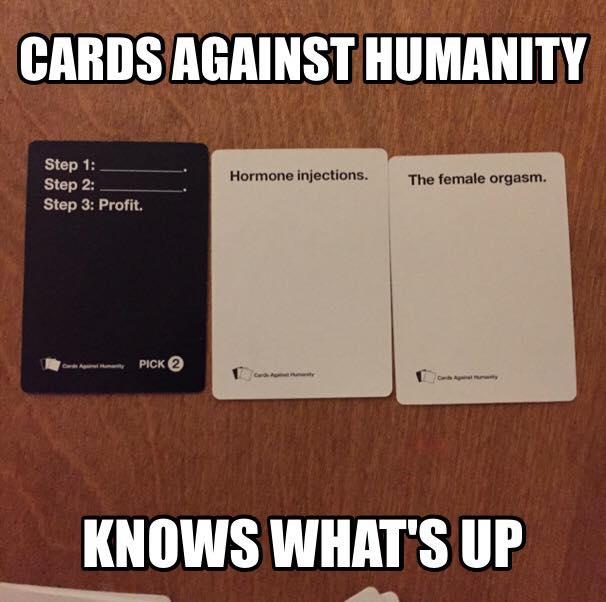
Life continued much that same way for the next eleven months or so, which is what I expected so I thought nothing of it. Until I saw this meme on Facebook:

facebook

And then everything changed. The first card was just a reference to a South Park episode, not a gamechanger. But the second and third cards? Wait, could this be true? Could the hormones I’ve been taking the last year actually mean that I could, you know, do stuff? This had to be a joke, right?

Under this post were a bunch of comments from other transgender women. The general consensus was that this was no joke. That the introduction of estrogen into the system slowly has reprogrammed a lot of my nerve responses to things, and flipped on a bunch of switches that had previously been off. Suddenly my mind was awash with the idea that maybe, just maybe… I’ve been doing it wrong this whole time? Or more to the point, I had an actual physical barrier that was keeping me from a climax? I had to investigate this.

And, y’all, it was true.

A little bit of trial and error and quite a bit of internet research later, and I had my first ever orgasm, brought on by my very delightful new Magic Wand.  And for the first time in my life, I can honestly say that I totally get what the appeal of sex is, and why so much of our society is all about it. Because holy shit, that first time that I used my Wand, the sensation was so unexpected, it came on so strong and so much at once, that I actually had to put that thing away in a drawer and leave the room. This is a thing? This is a real thing that can happen to my body? Are you kidding me? No wonder all of you keep making such stupid decisions in the quest to doing this in more and more interesting ways.

Wedding Night Sex

Talk it out

When it comes to the wedding night, it’s imperative you and your partner get on the same page. “Have a conversation with your spouse about your wedding night and make a decision together about what kind of connection you want to have on that night.

Chances are, if you are having worries, he or she may be too. And sharing your worries helps you manage both your expectations and any anxiety you might have.

Additionally, it’s smart to sit down and talk out how you anticipate your mind and body will feel after a non-stop and emotional day. It makes sense for couples to talk over together how they might feel after their wedding, and have some ideas about what might feel good for them sexually. But your conversation doesn’t have to stop there. When the time comes the couple can talk about what they’re in the mood for.

Concentrate on having good sex before your big day

It’s one thing if you’re waiting for marriage. But if you and your partner have already knocked boots, “have sex as often as you like before the wedding. Couples who ‘hold off’ having sex immediately before their wedding night create anxiety and unfair expectations, ultimately putting more pressure on themselves to have spectacular wedding night sex. Anxiety and expectations do not create desire or promote arousal.

With managed expectations and memories of mind-blowing sex fresh in your minds, you’ll be more likely to give yourself and your spouse a break if the wedding night falls short of amazing sex.

At the end of such a long day, it’s reasonable to simply want to crawl into bed with your spouse and get some sleep at the end of a day where you’ve been the center of attention. Don’t be hard on yourself if things don’t go as planned.


Curated by Erbe
Original Article

If Men Menstruated…

Sadly, even in 2016, our world is still extraordinarily backwards when it comes to women’s sexuality. Our culture sends mixed messages about sexual health — on one hand shaming women for being sexually active, and on the other, using the media and social norms to sexualize female bodies.

The double standard presented to women results in confused silence. We are supposed to have sex but not discuss it, we are supposed to present a certain KIND of sexuality in specific contexts and with limited parameters. We must be both sexually knowledgeable and pure.

What is the result? Silence. Misunderstandings. Misinformation. And therefore, unsafe practices, beliefs and spaces for women to be having sex.

Moreover, it means there are almost NO options available for women if they DO wish to explore changes in their sexual health.

If you’ve spent any time on the EmpowHER website, you know that plenty of women have questions and concerns about their sexual health. And many don’t feel comfortable in asking about them. Many more don’t have access to other forums that openly address their apprehensions with facts and evidence-based information.

This is why websites like EmpowHER, which foster conversations and inspire women to advocate for full inclusion of ALL bodies in research, are so crucial! Together we can ensure that our health needs and rights are part of the equation when it comes to medical research.

We can demand respect and equality – not only for women, but for Black women, Asian women, Hispanic women, trans women, queer women, and everyone else that is currently left out.

We can keep conversations going about women’s sexuality and silence the voices that say we are LESS THAN, tell us how we can feel, indicate which of our parts are important, and glorify or demonize our bodies, behaviors and brains.

So ask questions! Talk about your concerns and needs! It’s time to normalize women’s sexual health and spread the word when you learn something new. Remember, it’s okay to talk about sex!


Curated by Erbe
Original Article

Clearing Sexual Numbness

Let’s learn a few intriguing ways of coming into passionate aliveness right now!

First, practice deep breathing to build feeling, thus opening the pathways to heal the cell tissue and the mind. Use your deep breathing to build your sexual response. Inhale fresh aliveness and new, sparkly, stimulating life-force to your nerve receptors. Exhale, intentionally moving the numbness out like wind clears smog.

Now uplevel with some deep breathing into your pelvis. You can do this while just sitting and reading. Inhale, bearing down using the same muscles that you use to evacuate your bowels. Tune into the subtle sensation of feeling sitbones moving and genitals, perineum, and anus pressing into whatever you’re sitting on — chair or floor. Do this for at least five breaths as it takes a while to disperse numbness. Check out how sensation changes with each breath. Stay feeling what’s happening, not thinking about it!

If you have more space and privacy, breathe into your pelvis while in a hip opening pose. Start with Baddha Konasana done lying on your back. Lie down. Bend your knees, feet together. With the outside edges of the feet together, relax your legs out to the side in a diamond shape.

2011-08-18-BKontheBackIntensives.jpg
Then place your hands on your genitals to help you direct your breath. Be compassionate with yourself. If this is scary, give yourself more time (10-20 breaths) to breathe through the fear. Disperse the fear just like you did the numbness. Get curious about what’s the next layer behind the fear. Use this exercise to clear the backlog of emotional baggage (numbness, fear, shutdown, trauma, lousy teachings about sexuality etc), teaching your pelvis how to respond authentically to new and wonderful sensations.

Tokyo and the Death of Sexy

3. Work.

Driven by financial fears, the Japanese are working harder than ever, with 22% of people putting in more than 50 hours a week, and 200 people per year dying of karōshi, or overwork: dying of strokes or heart attacks on the train to work, or on the job.
Married people get home too tired to have sex with their partners, and with personal time at a premium, many single people prefer not to, in their perception, “waste” time on relationships with others when they could be working on their hobbies or pursuing other interests.

4. Replacement.

Some of the quirky inventions of Japan designed as substitutes for human contact could be contributing to the problem: virtual girlfriend games, pillows with women printed on them, sex dolls, and pornography- all options where one’s sexual and emotional needs are met on your own schedule, and leaving you free to work or study or pursue other interests, and without having to open yourself up to rejection or pain. Some men have married their pillows and dolls, saying goodbye to human relationships forever.

What can we in the West learn from our brothers and sisters of Nippon, and how can we do better?

Americans are getting married later (27 for women, up from 21 in 1964) but losing our virginity around 17, on average, and we aren’t worried about having sex before marriage. We’re having lots of sex, even if we’re not always having lots of relationships, with over 50% of New York single year after year. Japan’s overworked, solitary citizens make our phone-spawned hookups seem warm, old-fashioned and romantic by comparison.

My advice on not turning Japanese, I really think so:

Stay connected. Stay empathetic. Keep up with friendships, with family, with current and ex-lovers.  Use technology to get and stay connected- but not to replace connections with people.  What is life for, but for connecting and communicating and sharing with other human beings? We may be embroiled in a divisive election year, we may have social problems, but please- let’s not start marrying pillows.